
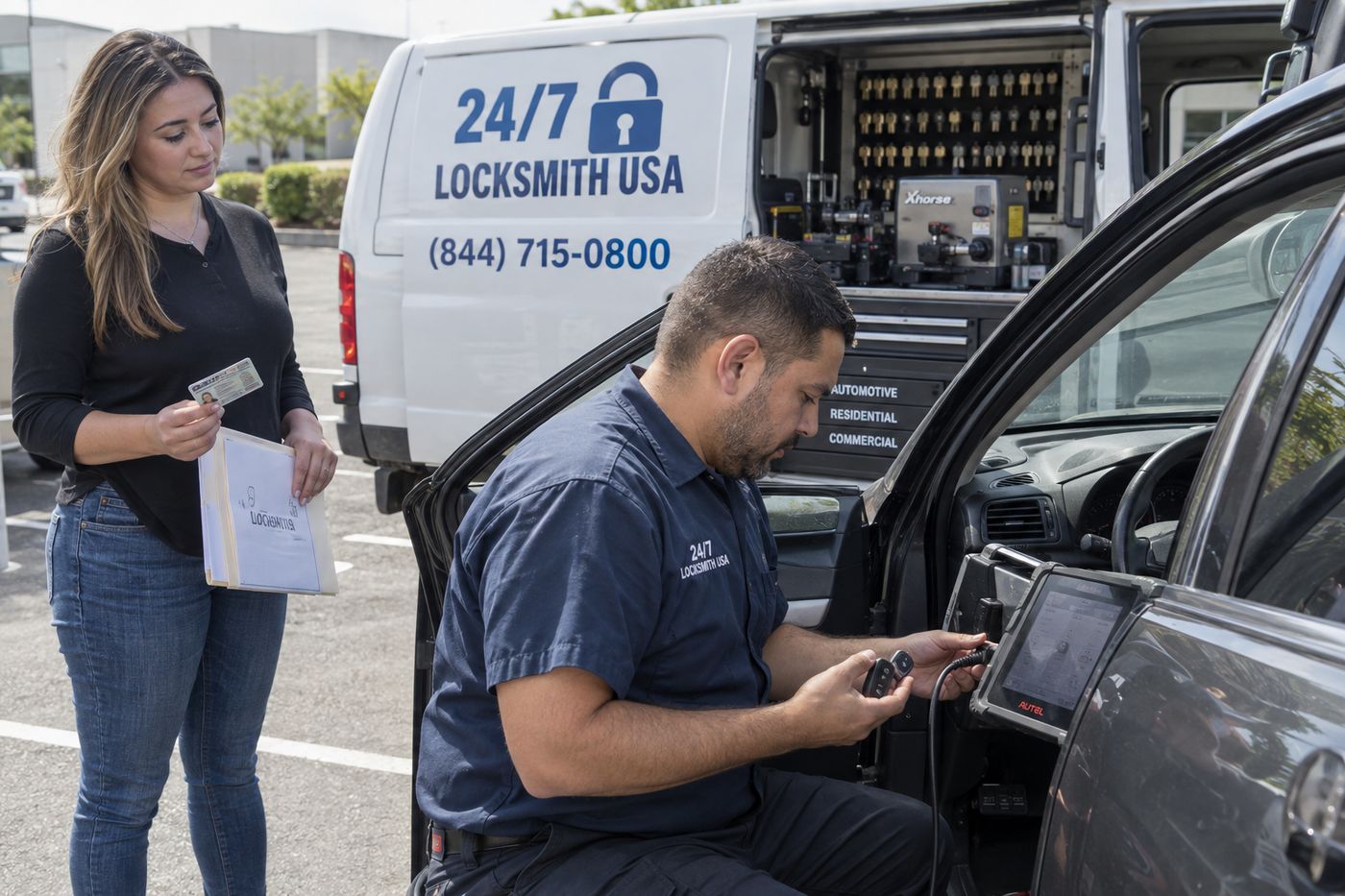
What we handle in Fort Myers.
One mobile team across Fort Myers, residential, automotive and commercial.
Marine & Dock Hardware
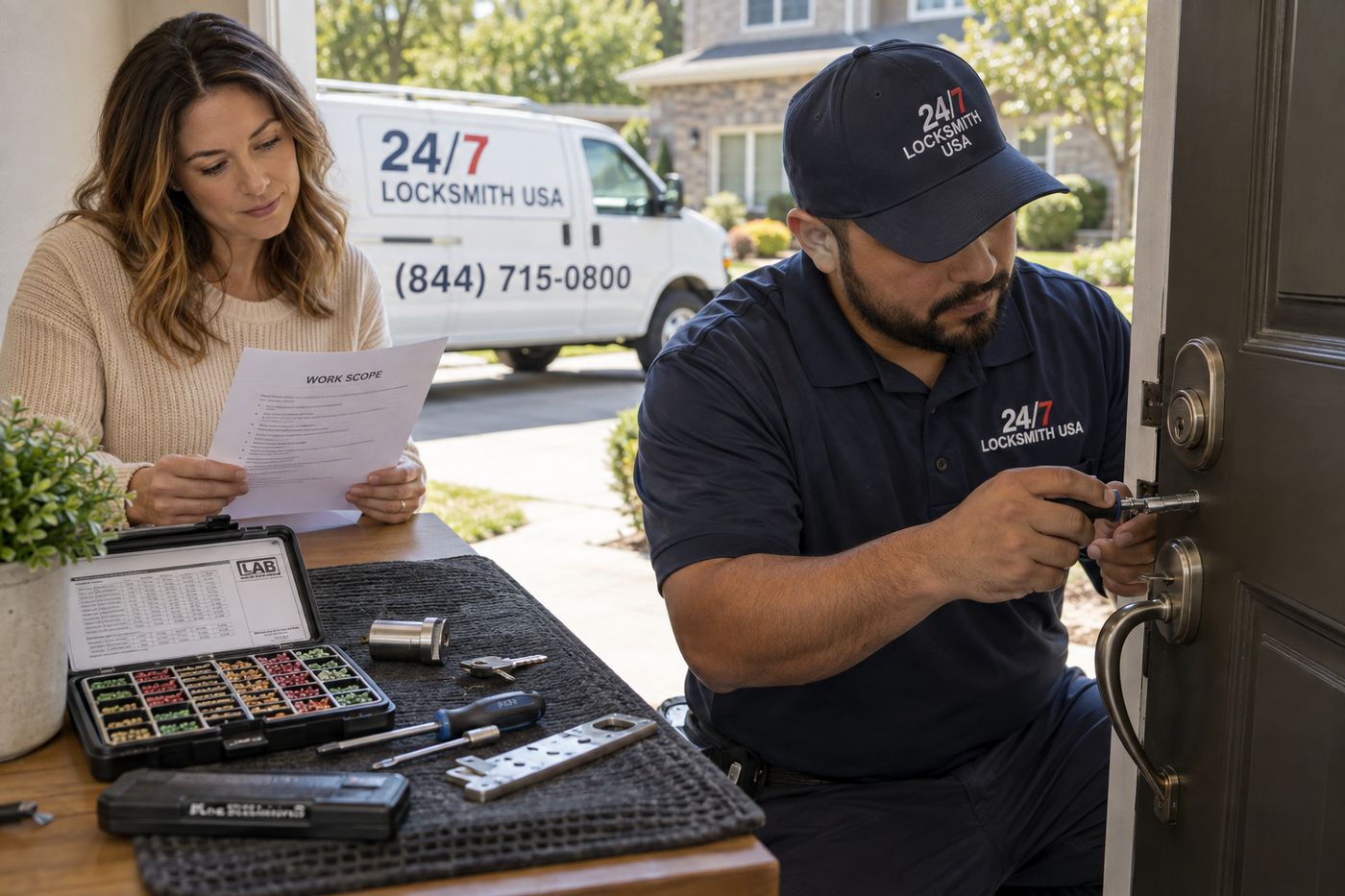
Corrosion-resistant cylinders and padlocks for boats, dock boxes and waterfront storage.
Historic & Period Hardware
Mortise locks and original hardware serviced rather than ripped out of a period door.
Impact Door & Storm Hardware
Multipoint locks and hardware on impact-rated doors adjusted, repaired or replaced.
Gate & Access Hardware
Pedestrian gates, keypads and gate locks for gated communities and fenced yards.
Mailbox & Cluster Box Locks
Communal and cluster box locks re-keyed or replaced, common in condo and HOA buildings.
Emergency Lockouts
Homes, offices and vehicles opened without marking the door or frame, picking and bypass tools tried before anything more invasive, drilling reserved for a cylinder that is truly seized.
Locks in Fort Myers: what actually goes wrong.
In the four designated historic districts the door itself is regulated: city design guidelines require replacement doors to match the original configuration and prohibit vinyl, while allowing metal doors of matching configuration. Dean Park's stock is 1916 to mid-1920s Craftsman bungalow, Spanish, Mediterranean, Tudor and Colonial Revival construction, which means original mortise-prepped doors and non-standard backsets rather than modern 2-3/8 inch bored preps. Census 2000 recorded Fort Myers housing as 5.3% built 1939 or earlier, 14.9% in 1940-1959, 21.1% in the 1960s, 21.5% in the 1970s and 23.0% in the 1980s. Near the water, standard plated cylinders corrode from the inside out; solid brass or marine-grade hardware lasts several times longer for a small difference in price. That standing moisture plus chloride from the Caloosahatchee and Gulf corrodes cylinder pins, springs, latch bolts, strike screws and the contacts in electronic access hardware - FEMA documents salt-accelerated corrosion of metal hardware within 300 to 3,000 feet of shore and measurable 5 to 10 miles inland, and ANSI/BHMA A156.18 tests hardware finishes by salt spray with corrosion, staining and blistering as failure criteria. The city has four designated historic districts - Edison Park (1995), Dean Park (1997), Downtown (1998) and Seminole Park (1998) - and Dean Park's roughly 80 homes were built between 1916 and the mid-1920s in Craftsman bungalow, Spanish, Mediterranean, English Tudor and Colonial Revival styles. The city's design guidelines require replacement doors to match the original configuration, accept metal doors where the configuration matches, and prohibit vinyl. Hurricane Ian also left a countywide repair backlog: 24,585 damaged residential structures and 5,076 homes destroyed in Lee County.
How to describe your problem so the call goes well
A short, precise description is the most useful thing you can give a locksmith. Start with what is locked: a front door, a sliding door, a gate, a car, a shop. Then give your location as exactly as you can, and say what has already happened. A key that snapped is a different job than a key that is simply missing, and a lock that will not turn is different again.
Add whatever else a technician would want to know. Is the lock new or old? Is it a brand name you recognize? Does the door stick in humid weather? Can you see any damage? Are children, pets or medication inside? You do not need technical terms. Plain words are better than guessed ones, and a clear description makes the quote more accurate.
This page is general guidance for people in Fort Myers. It does not name streets, neighborhoods or buildings and it does not claim any particular history of work in the area. Rules for rentals, associations and vehicle paperwork differ, so ask your landlord, community office or the proper local agency when a rule matters to you.
Before you call, take a breath and look at the lock itself if it is safe to do so. Note the brand if it is printed, note whether there is a keyhole, a keypad or a thumb turn, and note any damage. Stay on the line with your phone fully charged, and if the signal is weak, move to a spot where you can hear clearly. That thirty second look gives the dispatcher information that can otherwise take several minutes of questions to gather.
A second home that sits empty
Southwest Florida has many homes that are occupied only part of the year. Locks on a house that sits closed up face their own problems. Humid air works on metal parts, hinges stiffen, and keys that have not been used in months can feel gritty when finally turned. The first visit back is not the moment to find out that the deadbolt has seized.
If you own such a home, make a habit of asking someone reliable to look in occasionally and operate the locks. A deadbolt that is turned regularly tends to stay smooth. When you arrive, test every exterior door, the garage entry door and any gate before unloading the car. If something is stiff, deal with it that day.
Think too about who holds keys. Property managers, cleaners, caretakers and relatives may all have copies. Rekeying makes sure the list of people who can enter is the list you intend. Read about lock rekey service to see how it works, and about smart lock installation if you would like to issue and cancel codes without handing out metal keys.
If you rent the home to guests, a code that is changed between stays is simpler than hunting for lost keys. Whichever method you pick, ask how the lock behaves in damp air and how to replace its batteries before you rely on it for a full season. Also keep a note of which key fits which door, since a bundle of identical looking keys is a common source of confusion when you return after months away.
After a storm, check the door before you trust it
Coastal Florida lives with hurricane season, and the days after a storm are when doors and locks tell you what happened. A door that used to close easily may now drag. A deadbolt may not reach the frame. A swollen jamb can bind the latch so that you cannot lock the house at all. These are repairs for a trained person, not an afternoon experiment.
Keep people clear of any door that looks bent, split or off its hinges. Do not carry out repairs that involve garage door springs, cables or openers, which are under dangerous tension and need a trained technician. If a lock is stuck, avoid forcing it with tools, since that often turns a small problem into a bigger one.
It helps to prepare before the season. Our hurricane season lock and key prep guide suggests keeping spare keys in a sealed, waterproof container, photographing important papers, and noting where your VIN and registration are. If a key fob went in floodwater, read car key fell in water before attempting to dry or test it. Salt water is especially hard on electronics, and rinsing and drying should be done as a technician advises rather than by guesswork. Putting a wet fob in rice or in the sun does not reliably help and can sometimes cause more harm.
- Walk around and check each exterior door for latching and alignment.
- Avoid forcing a stuck lock or a swollen door with tools.
- Leave garage door springs, cables and openers to trained technicians.
- Keep spare keys and copies of ownership papers in a sealed container.
Locked out of the house or the lanai
Sliding doors, lanai entrances and side gates are common in Florida homes, and lockouts do not always involve the front door. Whatever is locked, the safest approach is the same. Do not climb, do not break glass and do not pry. Check for a spare with a trusted neighbor or family member, then call.
When you call, mention the kind of door. A sliding door lock is different from a deadbolt, and a keypad lock needs a different approach than a keyed cylinder. The technician will check that you live there before opening anything. A photo ID plus a bill, lease or other paper that shows your connection to the address is normally enough.
Afterward, consider why it happened. If it was a one time slip, a keypad or a hidden spare with a trusted person may be enough. If a key was lost, rekey so that whoever finds it cannot use it. See home lockout help for more; if you recently bought the home, ask whoever sold it how many keys exist. A new owner is entitled to ask, and the answer is often surprising. Once you know the count, you can decide whether rekeying the exterior locks is a sensible first purchase, before you start on paint and furniture.
Car lockouts in a hot climate
A locked car in southwest Florida heat is more than an inconvenience if someone is inside. If a child or an animal is in the vehicle, call emergency services and tell the locksmith as well, because a hot car becomes dangerous in a short time. Never assume you have time to wait for a quote when someone inside is in distress.
In a calmer situation, get into shade, keep your phone charged and think about whether another key exists. A spouse, parent or roommate may have a spare. If not, a locksmith can open the car without damaging the paint, door seals or electronics, once ownership has been checked. Have your registration or ID ready and the car's make, model and year.
Our page on car lockout service explains what to expect. If the problem is a locked trunk rather than a door, say so on the call, since a trunk is handled differently. Locking keys inside a running car is a particular risk, so build the habit of checking your pocket before every door closes. Another habit is to keep the spare key out of the car entirely. A spare in a magnet box under the bumper is easy for a thief to find and does little for you if the real problem is a dead fob battery or a broken key.
Car keys and fobs from lost to programmed
Most late model vehicles use keys that talk to the car. A chip in the head of the key, or a smart fob carried in a pocket, sends a code that the car must recognize before the engine will start. That is why a plain copy from a hardware store may open the door and still fail at the ignition.
A locksmith who handles automotive work can usually cut a replacement and program it to your car using the VIN, after confirming you own the vehicle. You will typically need registration or title plus a photo ID. If the vehicle is leased or financed, the paperwork may carry another name, so mention that on the call. Our guide on leased and financed car keys explains what is commonly asked.
If every key is gone, the job takes more steps and is called all keys lost. Compare that with making a spare while one key still works, because a spare takes far less work than a rescue and leaves you with a backup you can test. The first is a rescue, the second is easy insurance in terms of effort. For details see all keys lost service and ask about fob programming when you call. A technician may also ask whether the original fob has a visible number or markings, since these can help identify the correct replacement. Photographing your key before it goes missing is an easy way to save time later.
If you only have one key, treat that as the urgent part of the story. Duplicating a working key is a small job compared with building a new key from nothing, and it protects you from a bad day in a parking lot. It is also a good time to check that the spare actually starts the car, since a spare that opens the door but cannot start the engine is not really a spare.
Rentals, turnover and landlords
Where many homes are rented, turnover is constant, and so is the question of who holds keys. Tenants should check the lease before changing any lock. Some leases require the landlord's approval or a copy of the key. Landlords, for their part, should rekey between tenants so that the previous occupant cannot enter.
A simple routine helps. Keep a log of each unit with the date of the last rekey and the number of keys issued. Test locks between tenants and fix anything that sticks. Replace lost keys with a rekey rather than a duplicate, so the missing key becomes useless.
If you manage several doors, a keyed alike or master key system can reduce the number of keys you carry. Learn about apartment and landlord locksmith work and ask how a master key system organizes access. Always agree in writing who is authorized to request work on each door. That clarity avoids disputes about who changed what. It also helps if a lock fails, since you know whom to contact and which keys should open the door.
Shops, offices and work vehicles
Small businesses depend on locks that function every morning. A sticky storefront cylinder, a back door that will not latch and a lost key after a staffing change can interrupt a day's trade. Commercial hardware is often heavier than residential, with exit devices, door closers and keyed systems.
Vans and work trucks add another layer. A fleet of vehicles with different keys is a hassle, and a lost work key can stop a job. Tell the locksmith the make, model and year of each vehicle and who is authorized to request keys. Ownership paperwork for a business vehicle may be held by the company rather than the driver.
Read about commercial locksmith service and ask about fleets. Whichever applies, write down who holds keys and look at the list again when staff change. Replacing a lost key promptly rather than hoping it turns up protects stock, cash and records, and the cost of rekeying a door is small compared with the risk of an unaccounted key.
Broken keys, worn keys and ignition trouble
Metal fatigue is real. A key used daily for years loses its sharp edges and eventually may snap. If a key breaks in a lock, stop. Do not pull on the stub or twist it. A technician has extraction tools designed to remove the piece without damaging the cylinder.
Ignition trouble can feel mysterious. A key that will not turn might have worn teeth, a worn ignition cylinder, or a steering column that is locked against the wheel. Describing what you feel and hear helps. Does the key go in? Does the dash light up? Does the engine crank? Those answers narrow the cause.
Our pages on broken key extraction and the usual reasons a key will not turn explain the typical causes. Replace worn keys early, and avoid hanging a heavy bundle from the ignition, which speeds up wear. Weight on the ignition cylinder presses on the internal wafers each time the car moves, and over months that can loosen things until the key turns badly. A lighter key ring helps the ignition last longer and costs nothing to try.
Replacement of a worn ignition cylinder is sometimes needed when the damage has gone too far. If that is your situation, expect the technician to ask for proof of ownership and to explain what the repair involves, including whether new keys will be cut to match the new cylinder.
Choosing carefully and finding nearby pages
People who are locked out are vulnerable, and dishonest operators know it. A trustworthy company explains the service call charge, gives a quote on the phone and checks ownership before opening anything. Be wary of a low advertised figure that grows on arrival. Our guide on how to spot a fake locksmith gathers warning signs.
If you are traveling along the coast, you may also find our general guidance for Naples and neighboring cities useful. The principles are the same, although local conditions differ.
When you are ready, call, describe the situation and have your ID and ownership papers ready. Ask about the service call charge and the quote before anyone is sent. If anything on the phone sounds unclear, ask again. A reputable dispatcher will not mind repeating the explanation, and you are entitled to decide whether to proceed once you have heard the details in plain words.
Finally, keep your own records tidy. Note the date of any lock work, who received keys, and where spares are kept. A small file in a drawer, or a note in your phone, saves hours of guessing the next time something goes wrong, and it is useful if you later sell or rent the property.
Common questions
How do I prepare a second home for a long absence?
Operate every lock before you leave and when you return, so stiffness shows up early. Decide who holds keys, and rekey if copies are scattered. Leave a spare with someone reliable. Consider a keypad or smart lock if you often host guests, and ask how it copes with humid air and battery changes.
Is it safe to repair a garage door after a storm myself?
No. Garage door springs, cables, brackets and openers are under dangerous tension, and repairs belong to trained technicians. Keep people and vehicles clear of a damaged door. A locksmith can help with ordinary entry door locks, but should not be asked to perform risky garage door work.
What documents will I need for a replacement car key?
Usually registration or title plus a photo ID, and the VIN. If the car is leased or financed, tell the dispatcher, because the paperwork may be in another name. Ownership or authority is checked before programming, which protects you from someone else making a key to your car.
What should I do if a child or pet is locked in the car?
Call emergency services immediately and tell the locksmith as well. A closed car heats up rapidly in this climate, so do not wait for a standard appointment. Stay with the vehicle and keep the person or animal in view until help arrives.
Should landlords rekey between tenants?
Many do, because it makes sure the previous occupant and anyone they gave a key to can no longer enter. Rekeying keeps the same hardware and issues fresh keys. Tenants should check their lease before changing locks themselves, and landlords should record who holds which keys.
Does this page describe local rules or past jobs?
No. It is general guidance for Fort Myers and surrounding Southwest Florida, with no street names, no local statistics and no claims about previous work. Requirements for associations, rentals and vehicles vary, so check with your landlord, community office or the proper authority.