
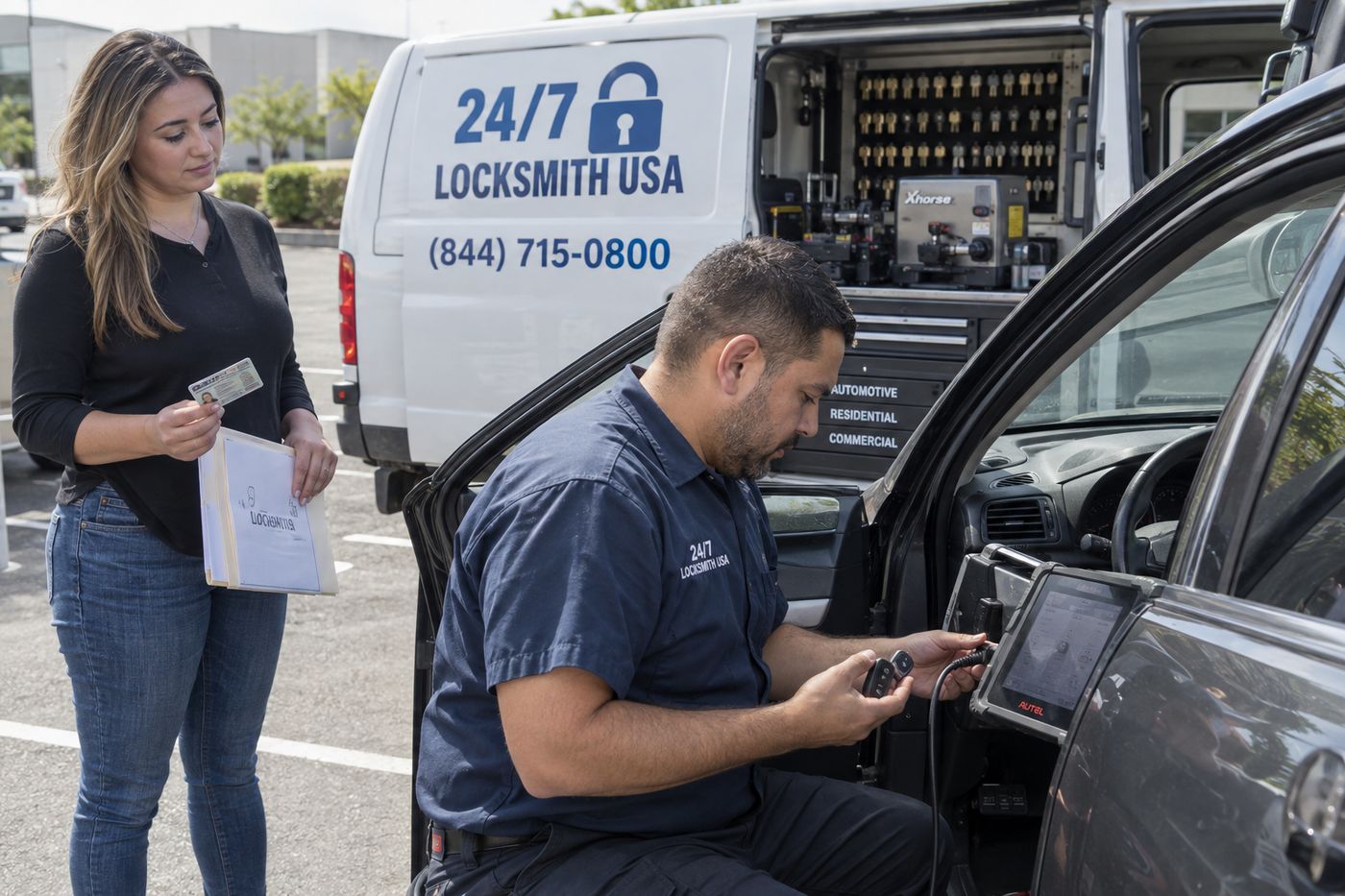
Coastal key work, done at the car.
Everything needed to cut and program a key travels to the parking space, squares and one-way lanes included.
All Keys Lost Origination
Key gone in the surf at Tybee? We build a new one at the beach lot rather than towing the car home.
Corrosion-Damaged Key Replacement
Marsh air pits blades and greens contacts; we cut and code a clean key to factory specification.
Smart Key and Proximity Fobs
Push-to-start keys programmed in a Bay Street garage without an appointment across the bridge.
Lock Cylinder Service
Salt-seized door and ignition cylinders on island-parked vehicles, freed or replaced on the spot.
Broken Key Extraction
Blades snap in corroded locks in the lanes downtown; the fragment comes out and a new key goes in.
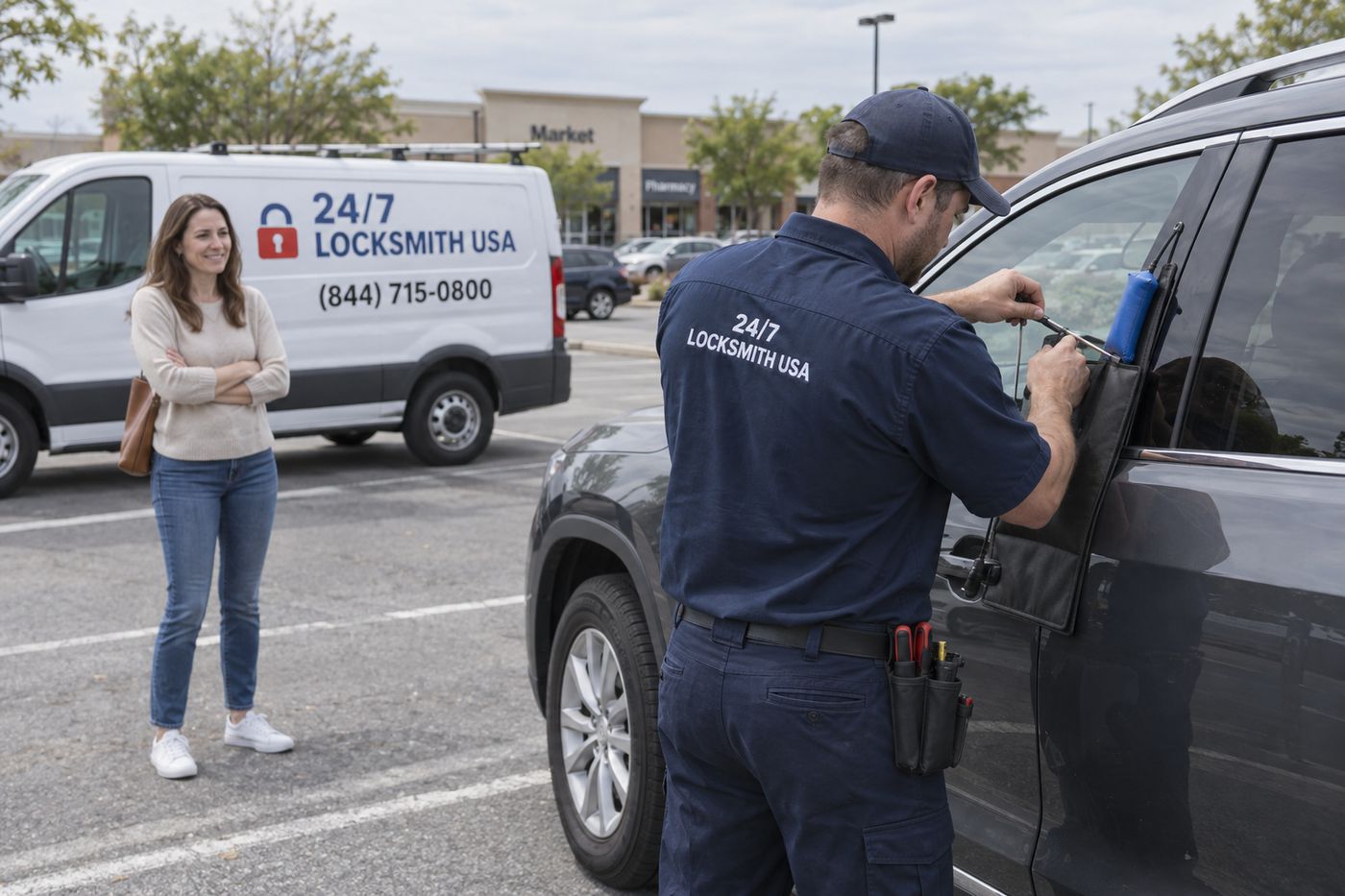
Lockout Entry in Tight Spaces
Doors opened in a one-car lane or a packed garage row without contacting the vehicles alongside.
What salt air does to Savannah keys.
Salt does the slow damage in Savannah. Air off the river and the marsh carries enough chloride to pit a key blade and green the contacts inside a remote, and vehicles parked outdoors year-round in Thunderbolt or on Wilmington Island show it first, with a fob that works from three feet instead of thirty and then not at all. Tybee Island does the fast damage. A smart key that goes into the surf or gets buried in wet sand is finished, and the beach lots there fill with day-trippers carrying exactly one key between them. In the Historic District the trouble is geometry: the lanes running behind the townhouses are one vehicle wide, the squares force constant circling, and metered spaces along with the Whitaker and State Street garages hold visitors' cars for days at a time, so an immobile vehicle in any of those spots becomes everybody's problem quickly. The port keeps container traffic and heavy trucks moving through Garden City and Pooler at all hours, and drivers who live out of a cab lose keys the way everyone else does. SCAD's turnover each term adds another layer, with students running one key on a car titled to a parent three states away.
Coastal air and the life of a car key
Living near the coast means living with moisture. Humid air settles into everything, and a car key is no exception. Metal blades pick up a film of residue, the small contacts inside a fob can corrode, and the rubber buttons on remotes soften and wear. None of this happens overnight, which is why the first sign of trouble often seems to arrive out of nowhere.
This page is general guidance for drivers in Savannah. It does not describe particular streets, parking areas or buildings, and it makes no claims about the company's history in the area. It is a practical reference to read before you need it, or while you are standing beside a car that will not cooperate.
Pay attention to small warnings. A key that needs a wiggle, a fob that works only up close, a door that sometimes needs two tries, an ignition that feels gritty. Each is a small signal that something is wearing down. Dealing with it early, before the key breaks or the fob fails, almost always costs less time and stress than reacting to a full breakdown.
Cleaning helps more than people expect. Wipe your keys with a soft dry cloth now and then, especially if they live in a pocket with lotion, sunscreen or snacks. Residue builds up on the blade and carries grit into the lock. Do not soak a key or a fob in cleaning liquid, because moisture is exactly what you are trying to avoid. A dry cloth and a minute of attention are enough, and the habit extends the life of both the key and the lock it enters.
Storm season and the keys you rely on
Summer and early autumn bring storms to the Georgia coast, and preparing for them includes your car keys. Heavy rain can soak a fob in a pocket. A power outage can leave an electric garage door stuck. An evacuation, if one ever happens, means leaving in a hurry with the things that matter, and vehicle keys sit near the top of that list.
Our guide on hurricane season lock and key prep offers a calm checklist for this. In short, make sure every household driver has a working key, keep a spare in a safe dry place, keep copies of your registration and insurance on your phone, and know where your documents are.
After a storm, take a moment to check the locks. Water and debris can get into door locks, and flooded vehicles often develop electrical faults, including trouble with fobs and central locking. If a vehicle has been in standing water, avoid trying to start it repeatedly, and ask a professional about the key and ignition system.
Plan for the case where you have to leave your home in a hurry. Keep keys in one known spot so that everyone in the household can find them in the dark. Make sure the spare is not locked in a house you may have to leave, or in a car you cannot reach. Have a plan for a second driver as well, so that if one person loses a key, another can still move the vehicle. These steps are simple, and they matter most when everything else is hectic.
Fobs that have been wet
Water is a common enemy of key fobs. A fob dropped in a puddle, forgotten in a pocket through the wash or caught in a downpour may stop working, or may seem fine and fail days later when corrosion catches up. Prompt, careful handling matters, and that means doing the right things in the right order, not hurrying.
Remove the battery as soon as you can, wipe the unit, and let it dry in open air. Do not press the buttons while it is wet, and do not use a hair dryer or place it in direct sun on the dash. Heat can warp the case and damage the board. Rice is a popular tip, though simple airflow does the same job. Give it a day or two before you try it again, and replace the battery with a fresh one even if the old battery looks fine, because moisture can shorten battery life without any visible sign.
Even if the fob seems dead, bring it along to the technician. The case, the chip and the model number help identify the correct replacement. If the fob went into salt water, rinse nothing; just dry it and let a technician judge whether it can be saved.
When the key turns but nothing happens
Some of the most confusing key problems are the ones where the key goes in and turns but the car does not start. This is usually a security system issue, not a mechanical one. The car expects a coded signal from the key's chip, and if it does not get one, it blocks the engine. A dashboard light shaped like a key or a lock often shows this.
Causes include a damaged chip, a key that was never programmed correctly, a worn key that no longer sits properly in the ignition, or a fault in the car's reader. Try your spare key. If the spare starts the car, the first key is the problem. If neither works, the issue is more likely in the car.
Our troubleshooting page on a flashing immobilizer light explains what the warning means, and the page on transponder key programming describes how a technician sets up a key so the car accepts it.
A word about duplicates. A hurried copy of a chip key made without programming will turn in the door but not start the car, and some copy machines do not copy the chip at all. Programming is the step that introduces the key to the car. If someone offers a copy that cannot be tested on your vehicle, be cautious. Ask for the key to be tested in the ignition and on the locks before you accept it, and keep the receipt.
Lost keys: a plain order of steps
When a key goes missing, begin with calm retracing. Check pockets, bags, the car seat, the place you last parked and the places you stopped along the way. Ask anyone who was with you. Often the key turns up after a few minutes of careful looking, and the whole matter dissolves.
If it does not turn up, treat it as lost. Think about whether it might be in someone else's hands, because that affects whether older keys should be disabled in the car's memory. Then gather your proof of ownership and VIN, and call. The guide on what to do when you lose your car key lays out the order of steps in more detail.
A technician makes a new key by confirming your right to the vehicle, identifying the correct key for your exact car, cutting the blade if there is one and programming the electronics. The service page on all keys lost for cars describes the full process.
Sometimes the lost key is not lost at all but stolen. If you suspect that, tell the technician and consider contacting the authorities. A stolen key and a stolen vehicle are different matters, but a key in the wrong hands, together with knowledge of where you park, is a real risk. Having the old key erased from the car's memory when a new one is programmed is a sensible step, if your car supports it.
Lockouts in everyday places
Lockouts happen in ordinary places at ordinary moments. A trip to the grocery store, a stop at a gas pump, a walk to a beach access or a run into the office. The keys land on a seat or in a cup holder, the door shuts, and the lock engages. Some cars lock themselves after a short time or when you walk away with the fob.
Before calling anyone, check every door and the trunk, think about whether a spare is within reach, and see whether your insurance or roadside plan covers lockouts. If the engine is running or anyone is inside, tell the dispatcher at once, and call emergency services if a child or pet is trapped. The heat in a closed car rises rapidly, even on mild coastal days.
A locksmith opens the vehicle with specialized tools made for the purpose. We do not explain methods here and advise against improvising. The page on car lockout service explains what to expect, and a few simple habits prevent most repeat visits.
Many lockouts are avoidable with a single routine. Before you shut the door, say it out loud: phone, wallet, keys. It feels silly for about a week and then becomes automatic. If your car has a hidden emergency blade, learn where it is. If you have a spare on a family member's key ring, make sure they know where they are going to keep it. Small agreements like these reduce the odds of a long wait on a hot pavement.
The ignition and worn keys
A car ignition is a mechanical part that sees thousands of turns over its life. The key and the cylinder wear together, and a worn key in a worn cylinder is a poor match. Symptoms include needing to jiggle the key, the key sticking, a gritty feel, or the key turning only at certain angles.
Heavy key rings contribute. A bunch of keys, charms and fobs hanging from the ignition adds weight and leverage, which stresses the cylinder every time you hit a bump. Keeping the ring light, with the car key separate from the rest, is a simple way to extend the life of the ignition.
If the key refuses to turn at all, do not force it. The steering wheel may be locked against the key, in which case gentle wheel movement while turning the key often helps. If not, stop and call for help. The service page on ignition repair describes when the cylinder itself needs attention.
If a key breaks off in the ignition, do not attempt to dig it out. The broken stub can usually be removed cleanly by a trained technician, but a screwdriver or a pair of pliers can push it further in and mar the cylinder. Keep the loose part of the key, because it helps the technician match the cut. Leave the car where it is if it is safe, and describe exactly what happened when you call.
Proof of ownership and the VIN, explained
Anyone who makes or programs a key needs to be sure the car is yours. That is why a legitimate locksmith asks for identification and documents. Typically that means photo identification and a registration or title. The VIN, found at the base of the windshield and on your paperwork, lets the technician find the correct key data.
Requirements vary by situation. If the vehicle is leased, financed, owned by a company or recently purchased, the paperwork may look different. Mention this when you call so the dispatcher can tell you what to bring. Do not be offended by the questions. They protect you from someone else doing the same thing to your car.
Our guide on how much information a locksmith needs goes through the typical list, and it is worth a short read if you have never done this before.
Keep a photo of your registration and your insurance card on your phone, along with a note of the VIN. If your phone is on the car seat inside the locked car, of course, it will not help, so share the photos with a family member as well. Few people prepare for this until they need it, and the ones who do are glad they did when the day arrives.
Quotes, charges and honest dispatch
A good call ends with a clear idea of what will happen and what it will cost. Ask for a quote by phone, ask what the service call charge covers, and ask whether anything could change on site. Honest answers are plain and patient. Evasive answers are a reason to look elsewhere.
No reliable dispatcher promises an exact arrival time before knowing where you are. Traffic, weather and distance all play a part. Expect honesty about what is uncertain. Our guide to the service call charge covers the terminology.
If the technician arrives and the terms have changed, you may decline. Keep a note of the business name, the quote and who you spoke with. That small record helps if a dispute arises later.
Another useful question is whether the quote covers the work you actually need. A lockout, a spare key and an all keys lost job are three different tasks, and a number given for one does not carry over to another. If the technician finds that your situation differs from what you described, ask for the new figure to be explained before work continues. Clear, calm questions are normal, and a professional expects them. You are not being difficult; you are making sure that both sides agree before anything is cut, opened or programmed.
Nearby cities and the Georgia overview
Georgia drivers move between cities often. The same general guidance is on the pages for Atlanta and Augusta, and the Georgia service page gives the wider view.
When you are ready, call and describe the vehicle, your location and what happened. Have your identification, proof of ownership and VIN ready, and ask for the quote and the service call charge before dispatch.
If you are reading this ahead of time, make a spare, test it and keep it somewhere dry. Replace a tired fob battery, and keep a photo of your registration on your phone. A few calm minutes now can spare you a frustrating afternoon.
If you share a vehicle with a partner, a parent or a roommate, agree on where the spare lives and who may request a replacement. Having that conversation on an ordinary day is much easier than sorting it out beside a locked car, with a phone battery running low and the weather turning.
Common questions
My fob got wet. What should I do right away?
Remove the battery if you can, wipe the unit and let it dry in open air. Avoid pressing buttons while it is wet, and keep it away from hair dryers and direct sun. Bring it to the technician even if it seems dead, because the case and chip help identify the correct replacement.
How do I prepare my car keys for storm season?
Make sure every driver has a working key, store a tested spare in a dry place, keep a photo of your registration and insurance on your phone, and know where your documents are. After a storm, check the locks and fobs for moisture and avoid repeatedly trying to start a flooded vehicle.
Why will my key turn but the car not start?
Usually the security system is not recognizing the key's chip. Causes include a damaged chip, a key that was not programmed correctly, a worn key or a fault in the car's reader. Try your spare key. If neither works, mention any dashboard warning lights when you call.
Can I get a new key if I have lost all of them?
Yes, in most cases. A technician confirms proof of ownership, uses the VIN to identify the correct key, cuts the blade if needed and programs the electronics. You will need identification and documents tied to the car. Ask whether older keys can be removed from the car's memory.
Is a heavy key ring really bad for my ignition?
It can be. Extra weight and leverage stress the ignition cylinder every time the car moves, and over time that speeds up wear. Keeping the car key separate from a bunch of other keys and charms is a simple way to reduce the strain and extend the life of the cylinder.
What if the terms change when the technician arrives?
You may decline. Ask for a quote by phone and ask what the service call charge covers before dispatch. If the story changes on site, calmly say no and call someone else. Keep a note of the business name and what you were told in case you need it later.