
Fort Lauderdale key and ignition work.
Mobile service to the beach, the port and everywhere between.
All Keys Lost Replacement
Back from a cruise with no key at all, and a new one built at the terminal lot.
Beach-Damaged Fob Replacement
Sand-fouled and salt-soaked remotes replaced and programmed at your vehicle.
Proximity Key Programming
Push-to-start keys handled in beachfront garages and Las Olas parking decks.
Ignition Cylinder Service
Grit-scored cylinders that grab the key are repaired without a trip up Federal Highway.
Broken Key Extraction
A key snapped in a stiff lock is removed and a clean replacement cut in place.
Car Lockout Service
Locked doors opened cleanly at a marina slip or a hotel deck with the key on the seat.
Fort Lauderdale beaches, boats and dead fobs.
Sand and salt water are the two ingredients that ruin keys here, and the beach makes both unavoidable. A day near the sand line at Fort Lauderdale Beach or Lauderdale-by-the-Sea leaves grit packed into a key blade and worked into the seams of a fob case, where it grinds against the contacts every time the button gets pressed. Anyone who takes the fob into the water is on a shorter clock, because salt keeps drawing current across the board long after the plastic looks dry. Then there is the volume side of it. Port Everglades turns over entire ships of passengers at once, and the terminal lots and offsite cruise parking fill with cars nobody touches for a week or two while a key sits at the bottom of a suitcase somewhere in the Caribbean. Long-term parking at the airport does the same on a daily cycle. Add a boating town where crew and owners hop between the docks along the New River and the Intracoastal with keys shared among several people, and drawbridge traffic that makes any unplanned trip across town expensive in time. We come to whichever slab of concrete your car is sitting on.
Why keys behave differently near the coast
Warm, humid air and salt in the breeze are part of daily life on the Florida coast, and electronics notice. A key fob lives in a pocket, a beach bag, a cup holder or a boat cooler, and over months it collects moisture and a thin film of salt. The first sign is rarely dramatic. The buttons feel stiff, the range shrinks, or the car responds only on the second or third press.
This page is general guidance for people in Fort Lauderdale and does not describe any particular street, marina or neighborhood. The advice follows from how keys are built. Metal blades corrode slowly, rubber button pads absorb moisture, and the small circuit board inside can develop green deposits near the battery contacts. None of that is unusual, and none of it is your fault.
If your fob has begun to act up, do not wait for it to fail completely. A weak fob is a warning that the key may stop working at the worst moment, such as in a parking lot after dark or at a boat ramp with a trailer attached. Treat the symptoms as a reason to make a spare now, while you still have a working key to copy from.
Another sign to watch is a key that needs extra effort in the door or ignition. A blade that drags, catches or leaves a gritty feeling may be worn, bent or dirty, and forcing it can break it off inside the lock. Do not spray random lubricants into a lock cylinder, since some attract dust and gum up over time. If a key has started to feel wrong, have it checked and replaced on your own schedule rather than on the day it snaps.
Water damage and what to do in the first minutes
Swimming, kayaking, fishing and sudden rain make water exposure common. If a key or fob has been in water, the first rule is to leave it alone. Do not press buttons to see if it works, because current across a wet circuit board can cause damage that would not otherwise happen. Do not use a hair dryer or an oven; heat can warp the case and loosen the chip.
Remove the battery if you can do so gently, dry the outside with a soft cloth and let the parts sit in open air. Rinsing salt water with fresh water is sometimes suggested, but only if the fob is opened and the battery is out, and you should be careful. When in doubt, stop and call for advice. Our page about a car key that fell in water covers the steps in more detail.
Be honest about what happened when you speak to a technician. Saying that the fob went through the wash or spent an hour in the ocean helps them judge whether it can be repaired or must be replaced. If the transponder chip survived, a new case or a repaired board may be enough. If not, a new key and programming from the VIN will be the next step.
Locked out near the water or in a beach lot
A classic lockout happens when someone steps out of the car, pushes the door shut with a hip and leaves the key on the seat or in the cup holder. At the beach, the key might also be in a bag in the back, or in a towel on the passenger seat. In bright sun with sand on your feet, it is easy to slip.
If you are locked out, stay near the car, find shade and make sure everyone with you is comfortable. If anyone, especially a child, pet or person with a medical need, is inside the car, treat it as an emergency and call emergency services first. The page about a child or pet locked in a car explains why that situation comes before any other.
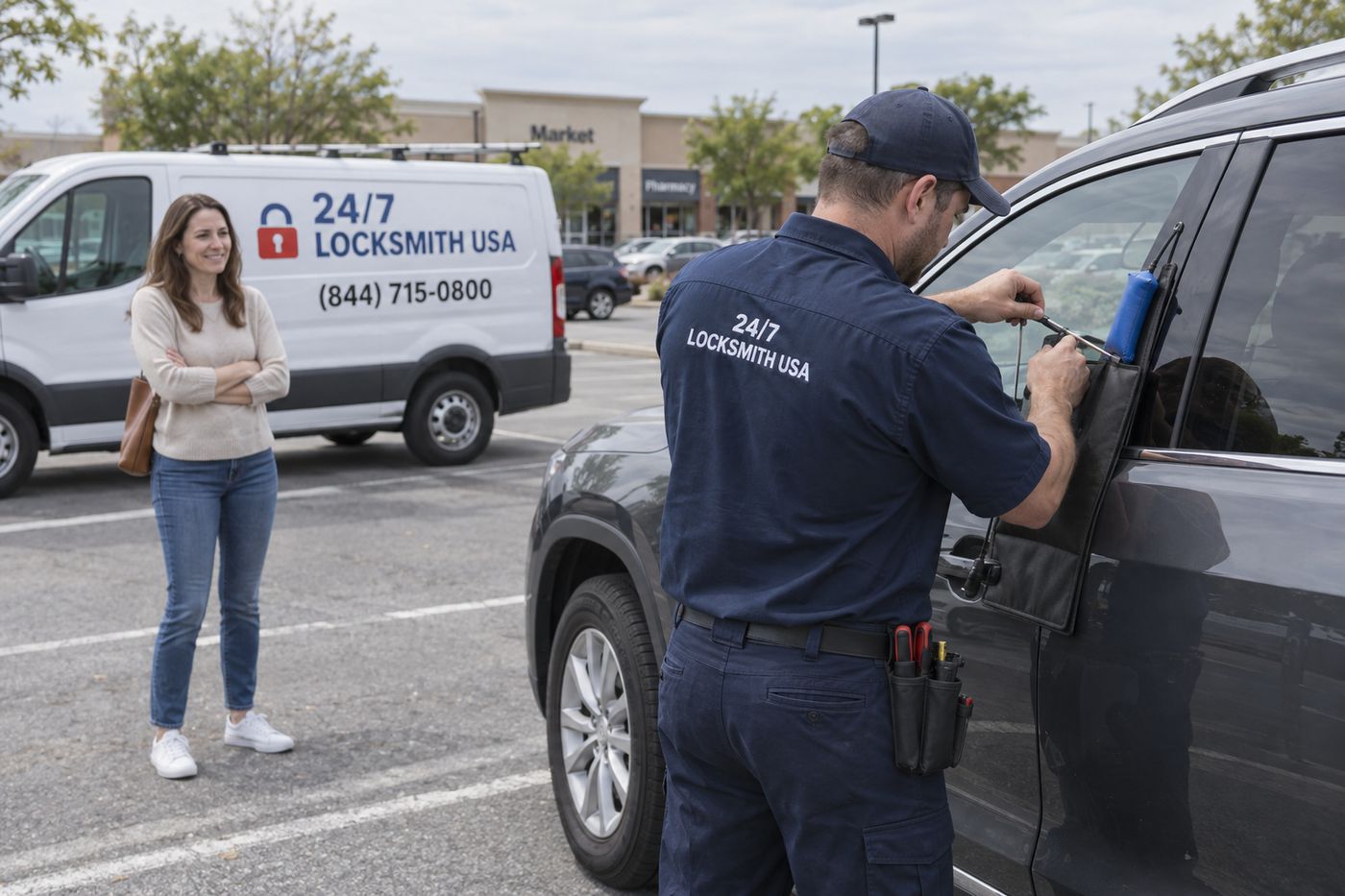
If the situation is not urgent, you can call for a lockout service. Read the page on car lockout service so you know what the process looks like. The technician will confirm that you own the car or are authorized, open it using methods meant to avoid damage and let you in. Nobody needs to cut or program anything when the key is simply inside the car.
Visitors, rentals and cars you do not own
A city with many visitors also has many rental cars. If you are driving a rental and you lock the key inside or lose it, the situation differs from one involving your own vehicle. The rental company owns the car, and the agreement you signed sets out what you can and cannot do. Often the rental company has its own roadside service number, and calling it first can save you from paying for something that is already included.
If you decide to call a locksmith anyway, be ready to show the rental agreement and your identification. The provider will want to confirm that you are authorized to deal with the car. Our rental car lockout guide goes through the sequence and explains what to ask the rental company.
Visitors also lose keys on vacation, far from their own spares. If you are traveling and cannot reach the spare at home, a calm plan helps. The key idea is to separate what is urgent from what is merely stressful. You may need only one working key to get home, not an elaborate set.
What is involved when every key is gone
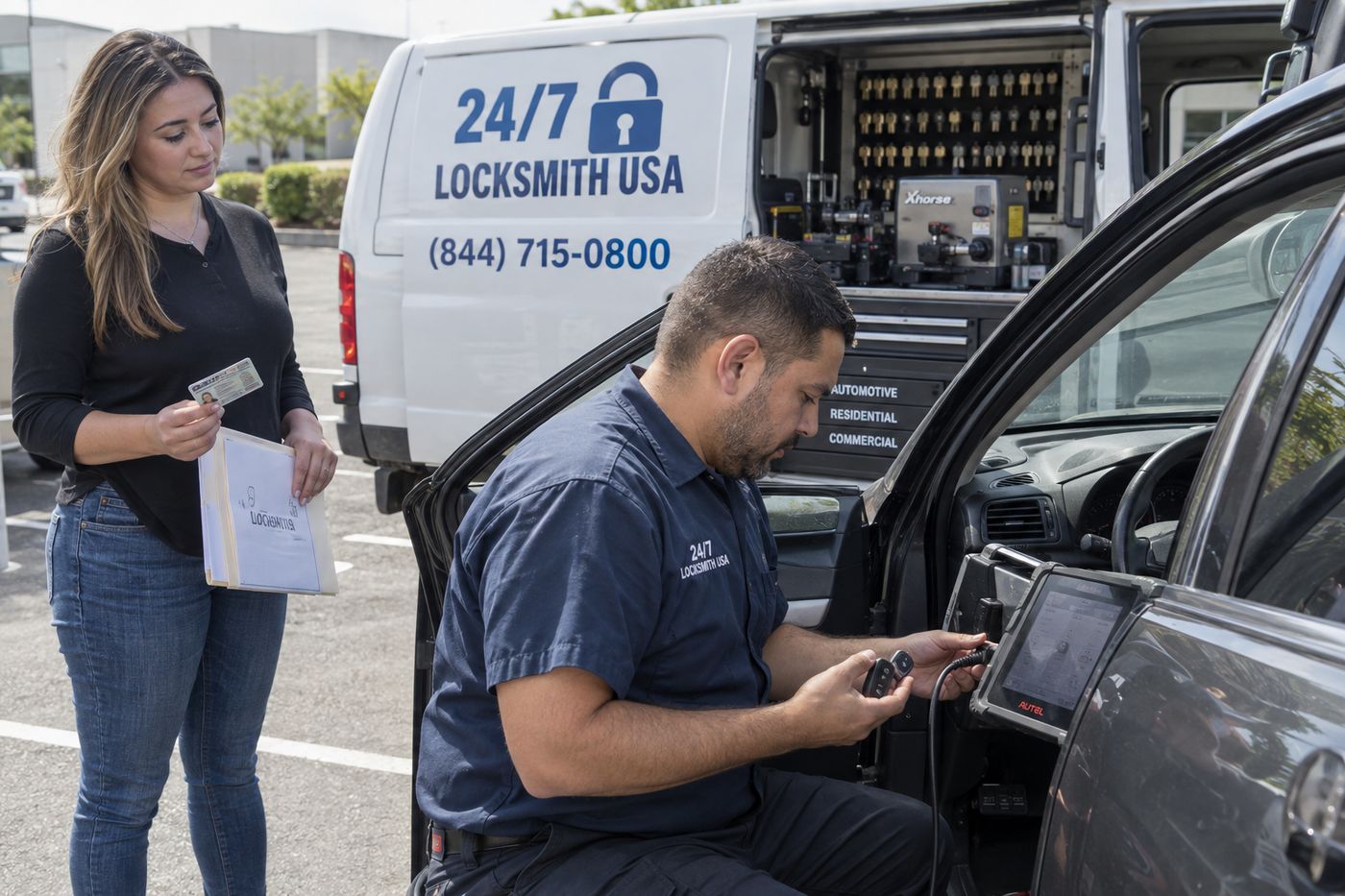
If all your keys are missing, the process starts with the facts about the car and about you. You tell the provider the make, model and year, the exact location, and the VIN if you can reach it. You show identification and some document connected to the vehicle. Only then does work begin, and the quote is given by phone before anyone is dispatched.
The technician then uses the vehicle number to determine the key blank and the cut. A blade is cut to match the locks. If the car uses a chip, the new key must be programmed so that the engine will start with it. The page about all keys lost explains this situation, and a short written checklist on your phone keeps the steps in order when you are tired or upset.
Be prepared for the possibility that the car must be reached in a particular way. If it is in a locked garage you cannot enter, in a tow yard or at a repair shop, tell the provider. Some jobs are done at the car, and some require moving the car to a place where equipment can be used safely. A clear description at the start helps everyone plan.
Different keys, different work
A key with a plain metal head is a simple cutting job. A key with a chip in the head needs cutting and electronic programming. A fob with buttons may need its own remote programming. A smart key for a push button start car is more involved. Knowing the type you have lets you ask the right questions.
If you are not sure which one you have, you can narrow it down yourself. Look for a blade, look for buttons, look at the shape of the cut and check whether the car starts with a button or a turn of the key. Then tell the provider what you see.
Ask about the number of keys. Many people order only one and find that they need two. A second key costs less when it is made in the same visit than when it is ordered separately later, because the equipment is already connected and the setup is done. You do not have to buy more than you want, but it is worth thinking about before the technician packs up.
Heat inside the car and what it does to a key
Parked cars in a warm climate get very hot inside. A key left on the dashboard or in a cup holder is exposed to that heat for hours. Plastic cases can warp, batteries can weaken and glue holding a case together can soften. If a fob feels sticky or looks bent, it has probably been too warm.
Try to keep your fob in your pocket, a bag or a small pouch rather than on the dash. If you must leave it in the car, keep it out of direct sun. The page on summer heat and car key safety has more habits to try. Small changes extend the life of a fob and reduce surprises.
If the plastic around a key has started to crack or the rubber has worn through, replacing the case before it breaks may be worthwhile. A cracked case lets in moisture, and moisture is what eventually kills the circuit. A technician can often move the working parts into a new shell for you if the internals are healthy, so ask before you assume you need a full replacement.
One more habit worth building is to keep the fob away from other electronics and magnets. A fob stored against a phone, a magnetic clasp or a bag with a metal frame is not harmed in most cases, but heavy knocks inside a crowded beach bag do real damage over time. A small padded pouch costs little, takes a second to use and keeps both the buttons and the case in better shape.
Storm season and getting your keys ready
Florida residents know that storm season requires preparation, and keys are part of it. If you evacuate, you will want every vehicle key, house key and any storage key in one place. If your car is flooded, the key may also have been exposed, so do not assume it still works after waters recede.
The guide on hurricane season lock and key prep lists steps to take before a storm, including gathering spare keys and photographing your documents. Keep copies of the VIN and registration in a waterproof bag or in your phone, so you can show them if you need help after the storm.
After a storm, doors can swell, locks can corrode and keys can stick. If a lock feels rough, do not force it. Forcing a key can snap it in the cylinder, which turns a minor stiffness into a bigger repair. Call for advice, describe the problem and let someone look at it before you apply pressure.
Neighboring cities and your own home locks
South Florida is a chain of connected cities, and many people live in one, work in another and shop in a third. If your car trouble happens away from home, the same principles apply. You may find the pages for Hialeah and Miami useful, and the Florida overview collects general guidance in one place.
If your house key was on the same ring as the lost car key, think about the home as well. Whoever has the key may know where it fits, depending on how it was lost. The rekey service changes the lock so the old key stops working, and it often costs less than replacing the hardware. Ask your landlord first if you rent.
Whether you own or rent, home and car security belong in the same conversation. Take an evening to walk around, check that every lock works and decide where spare keys will live. That small investment of time is the easiest way to keep a key problem from becoming a bigger one.
If you share a building with neighbors, remember that a lost key may also affect shared spaces such as a gate fob or a mailbox key. Tell the property manager promptly, because they may need to deactivate the missing item. Acting early is the simplest way to stop a lost key from becoming a security problem for everyone who lives there.
Marina days, boat trailers and keys that travel
Boating adds its own wrinkles to the key story. A truck that pulls a trailer is often parked for hours at a launch while the owner is out on the water, and the key may be on the boat, in a dry bag, in a pocket or in a cooler. Salt water and sun are tough on all of those places. Before you leave the dock, take a moment to decide where the truck key will ride and make it a habit.
Many boaters keep a spare key in a waterproof case clipped inside the boat or tucked in a bag that stays dry. That works only if the case really is sealed and the spare is a genuine working key, not a plain copy that cannot start the engine. If your truck has a chip, a blade alone will not start it. Test the spare at home so you know it works before you trust it on the water.
Trucks, vans and work vehicles can have different key systems from passenger cars, and the page about truck and van keys explains what is different. If you tow, mention it on the call, since the location of the vehicle and its attached trailer can affect how the technician plans the visit. A little detail at the start prevents surprises when someone arrives.
Checking the quote before you say yes
Before you agree to dispatch, make sure you understand what you are paying for. The phone quote should cover the key, the cutting and programming, and the service call. Ask whether anything could change it, such as a different key type or a location that is hard to reach. A professional will explain.
Read about the service call charge so you know what it covers and why it exists. If someone avoids the question, or says they cannot give any figure until they arrive, consider calling another provider. Honest businesses are used to being asked.
When the work is finished, test every function before the technician leaves. Lock and unlock with the key, use the remote, start the car and open the trunk. If something is wrong, say so immediately. The simplest time to fix a mistake is while the person who made it is still standing next to you.
Common questions
Can salt air really damage a key fob?
It can contribute. Moisture and salt gradually corrode battery contacts and the small circuit inside a fob, which shows up as weak range or buttons that respond slowly. If your fob has begun acting up, it is wise to make a spare soon. Keep the fob dry and out of hot cars where you can.
What should I do if my key fell in the ocean or a pool?
Do not press the buttons and do not use heat to dry it. If you can, remove the battery gently, wipe the outside and let it dry in open air. Then tell the technician exactly what happened so they can judge whether the fob can be repaired or whether a replacement is needed.
I am visiting and lost the key to a rental car. Who do I call first?
Call the rental company first, because roadside help may already be part of your agreement. If you do use a locksmith, have the rental agreement and your identification ready. The provider will want to confirm that you are authorized before opening the car or making a key.
Do I need to know the VIN to get a replacement key?
It is very helpful, because the number identifies the exact vehicle and the key it uses. You can usually find it on the dashboard plate near the windshield, on the driver door frame, and on your registration or insurance card. A photo of your registration on your phone is often enough.
Why would I order two keys instead of one?
The equipment is already set up during the visit, so adding a second key is usually simpler than arranging another appointment later. A spare also protects you from the same emergency happening again. You are not obliged to buy more than you want, but it is worth asking about.
Is it safe to try to open my own car with a tool I found online?
It is not recommended. Modern doors contain wiring, sensors and sometimes airbags, and a wedge or rod can cause damage that costs far more than a service call. A trained technician uses methods designed to avoid harm. If you cannot get in safely, call for help and wait.