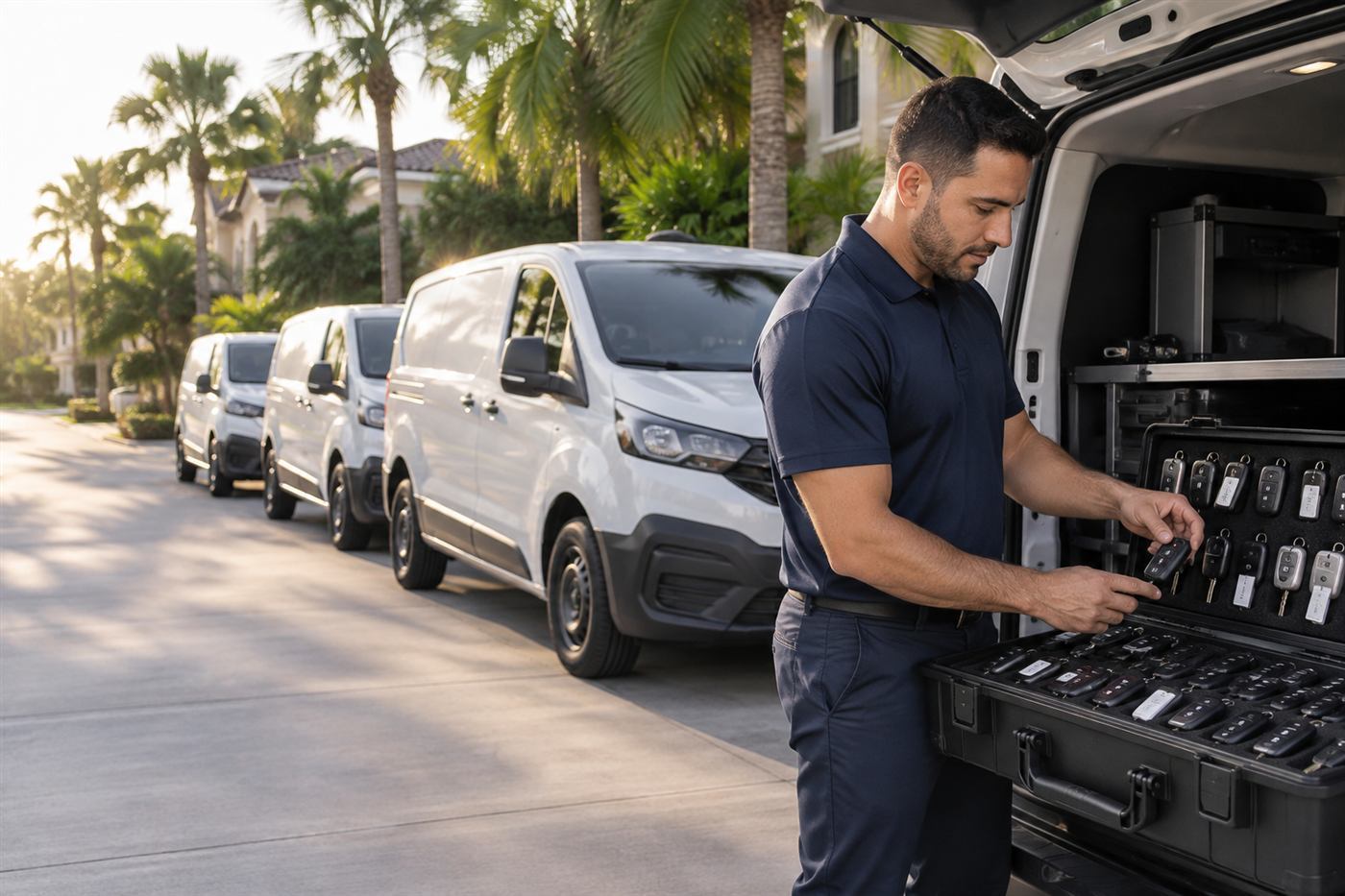
What a Seattle locksmith call usually involves
Calls from Seattle tend to start in a street space rather than a driveway. In neighborhoods like Capitol Hill, Ballard, Fremont, the University District and Queen Anne, many residents park on the street, and a lost or locked-in key can mean standing in the rain next to a car on a slope. Others begin in a downtown garage with a ticket in one hand and nothing in the other, or at a ferry terminal with a line moving and a key that is no longer in a pocket.
This site puts cars first and homes second. In a city where many people drive daily and parking is difficult, the vehicle is where a key problem becomes urgent. We handle homes, apartments and small offices too, and we describe those further down, but the order reflects what people call about most.
The mix of vehicles here is wide. Older Japanese and German cars from earlier decades sit beside newer electric vehicles with key cards, phone keys and proximity fobs. A technician needs to know which you have before quoting, so the first call is mostly questions about the vehicle. See types of car keys explained for a plain guide to the main kinds.
Everything begins with a phone call. We quote on the phone, we explain the service call charge before dispatch, and we send a technician only after you agree.
Rain, damp and what moisture does to keys and locks
Seattle is known for its wet seasons, and moisture has a quiet effect on keys. Fobs carried in damp coat pockets collect condensation. Batteries corrode at the contacts. Cases that are not fully sealed let in humidity. A fob that worked fine in summer may become unreliable by the second month of steady rain.
The signs are the same as elsewhere: buttons that need extra pressure, shorter range, a car that sometimes does not recognize the key. Try a fresh battery first. See how to change a key fob battery and how long fob batteries last. If the battery is not the cause, the fob may need repair or reprogramming. See key fob programming.
If a fob has been dropped in a puddle or washed with a jacket, do not use heat to dry it. Remove the battery if you can do so safely, let it dry naturally, and test it later. For a full soak, see what to do when a car key falls in water.
Door and trunk locks also feel the damp. A lock that sticks in wet weather may need cleaning or lubrication by a technician, not a squirt of whatever is in the garage. The wrong product can attract grit and make things worse.
Street parking in Capitol Hill, Ballard and other neighborhoods
Street parking means your car lives in public view for long stretches. It also means a lot of break-ins, damaged locks and stolen or lost keys. A smashed window or a punched door lock often means a technician is needed after the police report is filed, to repair a lock or reprogram a key.
If your car has been broken into, call the police first and do not touch anything that could matter to a report. After that, a locksmith can help with damaged locks, ignition cylinders, and key programming that makes sure a stolen key no longer works. See what to do after stolen car keys.
Parking on a street also makes a lockout public and sometimes unsafe. You may be next to traffic or a bike lane. Stay on the sidewalk side of the car, keep your hazard lights on if the car is running, and tell the dispatcher your exact block and which side of the street you are on. Mention if a parking restriction or a street sweeping window applies, since a vehicle might need to move.
If you live in an apartment building without a garage, a spare key kept inside the apartment is a good plan, as long as you can reach it. Make it a habit to know who has your spare, and keep a trusted contact on the list. Spare car key programming explains how a spare gets made.
Steep hills and tight garages
Seattle slopes make parking an exercise in angles. A lockout on a hill adds a few safety concerns. A car parked on a steep slope should be in gear or park with the wheels turned toward the curb, as the law and common sense require. If your car is in neutral with the key locked inside, or if the parking brake is off, tell the dispatcher. They need to know, and so does the technician, so that no one stands where the car could roll.
Garages in older downtown buildings and apartment blocks can be tight, dark and low. Technicians need room to work, and low ceilings and parked cars on both sides limit access. Tell the dispatcher about the level, the space number, and any height limit. If you have to meet a technician at the entrance, say so.
Garages are also places where fobs fail. Concrete and steel interfere with radio signals, and a fob that works in the open may not respond on level three of a concrete structure. This is a nuisance, not necessarily a failure. Try the hidden mechanical key, or walk toward the exit and try again. If nothing works, call and describe what you see.
For a lockout in a garage, see car locked with keys inside in a parking garage for the order of steps.
Ferries, commuters and long daily drives
Many people in the region cross the water by ferry, driving onto boats with all their belongings in the car. A ferry line is an awkward place to discover a missing key. You may have only a few minutes before the line moves, and the terminal staff may not be able to help with a key.
If you are on the ferry and the key is in the car, ask the crew what the policy is. Some will allow you to access the vehicle deck in a controlled way. If you have lost the key before boarding, the line moves on and you need a plan. Having a spare, held by someone on the other side of the water, is the most practical safeguard. See what to do when you lose your car key.
Long commutes wear keys. A key that has been in a pocket for years collects dirt, bends and wears at the teeth. A worn key may start the car one day and refuse the next. See worn car key symptoms.
If you drive for work, a lost key costs income. See fleet locksmith service and truck and van keys.
Electric vehicles, key cards and phone keys
Seattle has many electric vehicles, and these use some of the newest key systems. Some use a small card that must be tapped on the door pillar. Some rely on a phone key through an app. Others use a conventional fob with a hidden physical key. Each has its own way of failing: a dead phone, a lost card, an app that has been signed out.
If your phone is your key, treat charging as part of vehicle security. A dead phone and a locked car is a classic problem, and the fix depends on whether the vehicle also has a backup card or fob. Know where your backup is kept. See electric vehicle key cards and phone keys.
Some modern vehicles allow a technician to program new keys on site, while others need more preparation. The dispatcher will tell you which applies to your car after asking about the make, model and year. See smart key replacement.
The most useful step you can take is to have a physical spare that is not in the car. It is simple, and it stops a bad day.
Lost keys, spares and the all-keys-lost situation
If you lose every key to a car, the job is called all keys lost. It is routine for a skilled technician but involves more steps than making a spare: identifying the vehicle, confirming ownership, cutting a key and programming the car to accept it. See all keys lost car service.
Ownership matters. A technician will ask for registration, title, insurance card or an ID that matches the paperwork. If those are inside the locked car, other proof may work, such as a photo of the title, a lease or a loan statement. See proof of ownership for a car key.
If you still have one key, make a spare. See leased and financed car keys if your car is leased or financed.
A visitor with a rental should call the rental company first. See the rental car lockout guide.
Visitors, airport rentals and cruise-season traffic
Seattle receives a steady stream of visitors, and many of them arrive in rental cars picked up at the airport. They drive into a city of one-way streets, steep grades and pay-by-phone parking, and they leave the car for a few hours near the waterfront, the market or a stadium. A rental key left on the seat or lost in a bag is one of the commonest visitor problems.
A rental is not owned by the person holding the key, so the rules are different. The rental company may require that it authorize any work on the vehicle, and it may have its own roadside program. Call them first and ask what they want done. If they direct you to a locksmith, tell the dispatcher the make, model, plate and rental company, and have your rental agreement and a photo ID available for the technician.
Visitors also face time pressure. A flight, a cruise departure or a reservation will not wait, and a lockout can feel like a disaster. Take a breath, make the safe choices, and give the dispatcher every detail you can. If you are close to the time you must return the car, say so, because the dispatcher can often tell you honestly whether the work is realistic in that window and what the alternatives might be.
Locals can help visitors too. If a friend is visiting and borrowing your car, hand over a spare key with clear instructions, and share the plan for what to do if something goes wrong. A short note on your phone with the vehicle details, the VIN and the number to call saves a lot of confusion.
Finally, visitors are the group most likely to meet false locksmiths, because they do not know the local businesses. Use the checklist in how to spot a fake locksmith and insist on a clear quote and a clear explanation of the service call charge before anyone is sent.
Homes, apartments and older doors
Seattle has a mix of older houses, converted buildings and new apartments. Older doors and locks may have swelled from damp weather, and a deadbolt that glided in July may bind in November. Newer buildings may use keypads or smart locks, which bring their own failures.
If you are locked out of a home, see what to do when locked out of your house. For a deadbolt that will not turn, see what to do when a deadbolt will not turn. For a smart lock that has stopped working, see smart lock not working.
If you rent, a landlord or manager may hold a key or need to approve work. See apartment and landlord locksmith work. If you have just moved in, think about changing or re-keying locks. See lock rekey service.
How phone quotes and dispatch work
We quote on the phone and do not post prices online. A lockout, a spare, a fob replacement and an ignition repair are different jobs, and the vehicle matters. The call is how you get a real answer.
The dispatcher asks where you are, the make, model and year, the key type, and what happened. Complicated work may need an on-site visit before a final figure. A service call charge applies and is explained before dispatch. See the service call charge explained.
Our use of 24-hour is a service concept, not a promise of a technician at every hour and every place. The dispatcher will tell you what is possible at your location.
To prepare, read how to prepare for a locksmith visit and questions to ask before dispatch.
What to have ready and how to choose help you can trust
Get out of the rain if you can, keep your phone charged, and gather the following.
- Your exact location: block, side of the street, garage level or ferry terminal.
- Make, model, year, color and plate of the vehicle.
- The VIN, visible through the windshield or on the driver door jamb. See how to find your VIN.
- Proof of ownership: registration, title, insurance card or a matching ID.
- What happened: locked inside, lost, broken, worn or stolen.
- Whether you have a spare and where it is.
- Whether a child or pet is inside. If so, call 911 first.
Choosing a locksmith you can trust in Seattle
Be cautious with anyone who cannot give a clear answer on the phone. Warning signs include a figure that changes on arrival, no business name, no identification, an unmarked vehicle, and pressure to drill a lock that could be opened without damage. You may decline before work begins. See locksmith scam warning signs.
Verify credentials rather than trusting a claim. See how to verify a locksmith. Also check whether roadside coverage or insurance helps. See insurance and roadside assistance for lockouts.
When you are ready, call. Tell the dispatcher where you are and what happened. We will ask a few questions, quote by phone, explain the service call charge and send help when you agree. Call whenever you need us.
Questions people ask
I am locked out on a steep Seattle street. Is that a problem?
It can add a few safety concerns. Tell the dispatcher your exact block, the slope, and whether the vehicle is in gear or park with the parking brake on. Stay on the sidewalk side, away from traffic. The technician will plan around the slope and decide the safest approach on arrival.
Does rain damage key fobs?
Moisture can corrode battery contacts and get inside cases, which causes unreliable buttons and short range. Try a fresh battery first. If the fob has been soaked, let it dry naturally and do not use heat. If it still misbehaves, a technician can test the fob and the programming.
My car was broken into on the street. What now?
Call the police first and avoid touching anything that could matter to a report. Afterward, a locksmith can help with damaged door locks, ignition problems, and reprogramming so that stolen keys no longer work. Quotes are given by phone, and a service call charge is explained before dispatch.
I lost my key before boarding a ferry. What should I do?
If the vehicle is not yet onboard, you will likely need to leave the line. A spare key held by someone on the far side is the quickest fix. Otherwise call, describe the vehicle, and ask about options. If all keys are lost, ownership proof and vehicle details will be needed.
Can you help with an electric vehicle key card or phone key?
Often yes, depending on the make and model. Tell the dispatcher what you have: a card, a phone key, a fob, or a mix. Some vehicles allow on-site programming, while others need more preparation. Have your registration and ID ready, and know where any backup key is kept.
What is the service call charge?
It is the charge for sending a technician to you, separate from the work itself. It is explained on the phone before anyone is dispatched. If anything about the quote is unclear, ask the dispatcher to repeat it in plain terms. You should understand every part of it first.
Describe the situation by phone and we will tell you what the job involves. Quotes are given by phone. Jobs that cannot be quoted without seeing them need a technician on site, and the service call charge is explained on the phone before anyone is dispatched.
(844) 715-0800Related pages
Written by Claude (AI) (AI) for 24/7 Locksmith USA.