
Car key work we handle in Miami.
Everything below happens at your vehicle, anywhere in Miami-Dade.
Lost Car Key Replacement
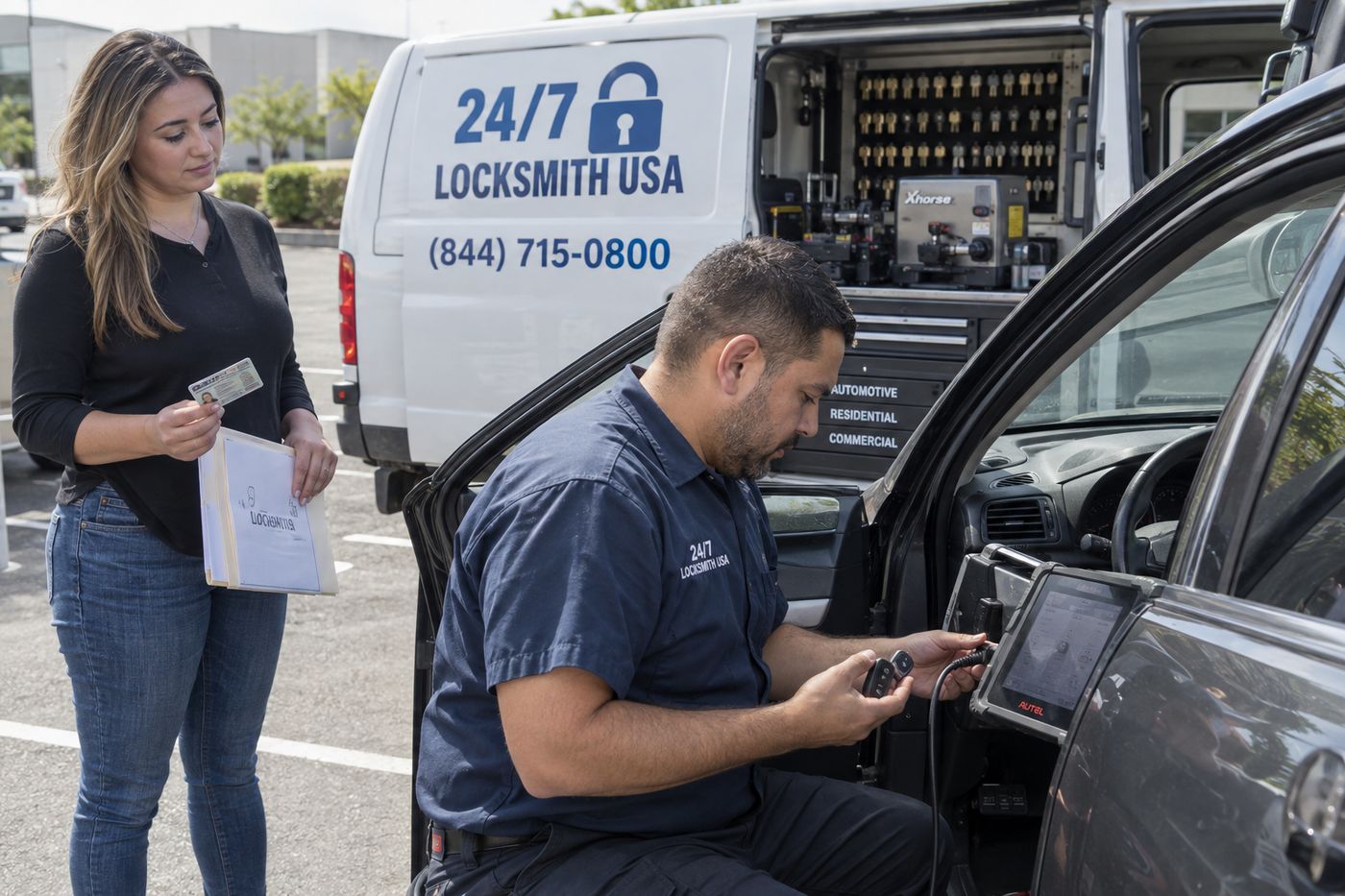
Every copy gone in an MIA garage or a Brickell tower deck? We originate a new key at the vehicle.
Smart Key & Proximity Fob Programming
Push-to-start keys for the European imports common on Miami Beach, coded to your VIN on site.
Ignition Repair & Replacement
High-mileage rideshare cars wear their cylinders out early; we rebuild or replace without a dealer tow.
Broken Key Extraction
Blade snapped off in a door or ignition gets removed and rebuilt where the car is parked.
Car Lockout Service
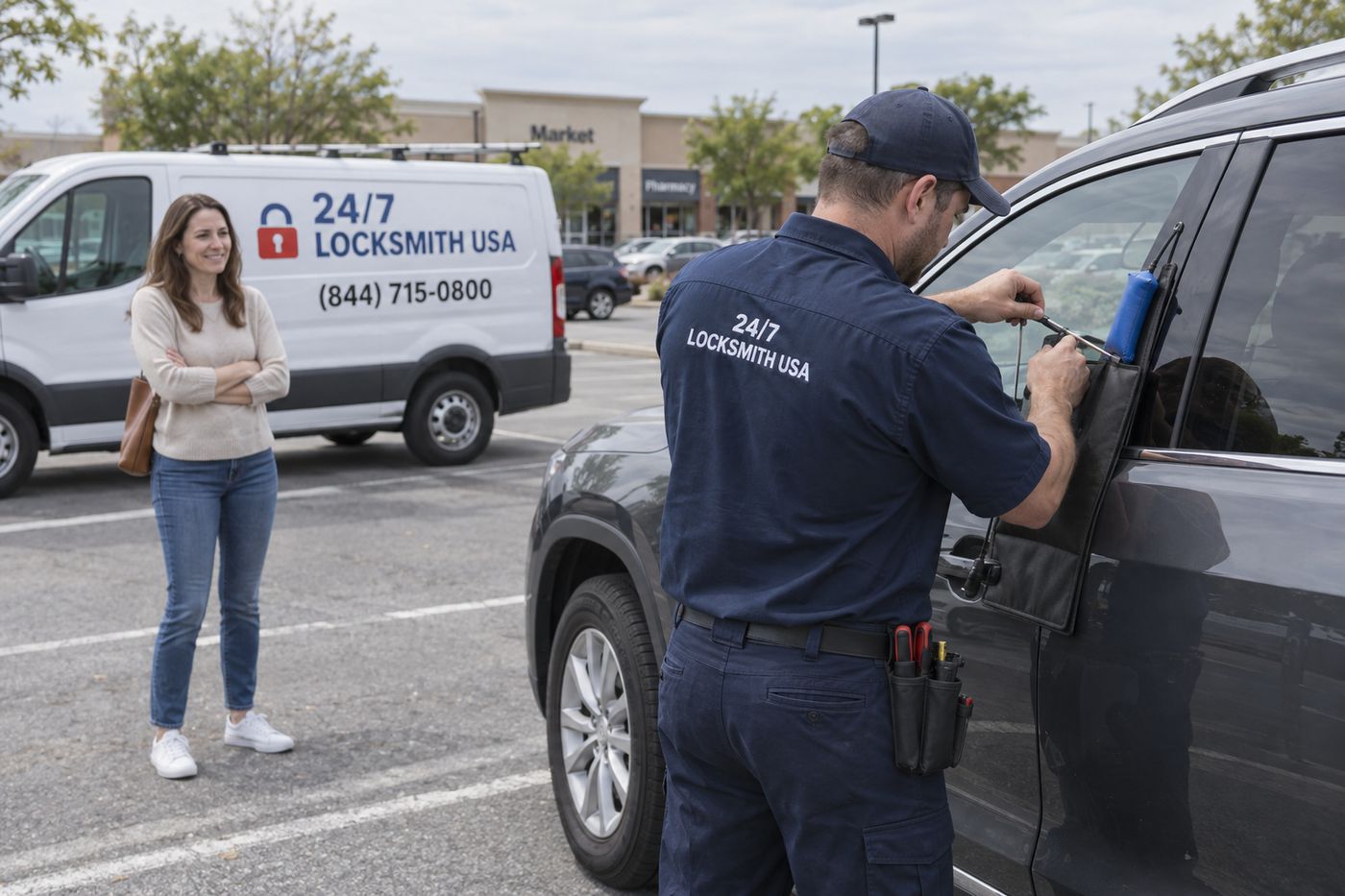
Keys shut inside at a cruise terminal lot, opened without prying the door frame.
Transponder Key Origination
Chipped keys made from scratch for older Miami-Dade sedans with nothing left to work from.
Why Miami goes through car keys.
Two patterns account for most of the calls we take in Miami-Dade. The first is the parking-structure loss: a driver flies out of MIA or sails from PortMiami, comes back a week later to the long-term garage or the Dodge Island lot, and finds the key gone somewhere between the terminal and the trunk. The second is the valet handoff, because Brickell towers, Design District restaurants and South Beach hotels move thousands of keys a night and proximity fobs get pocketed, swapped or dropped through a grate. Either way you are standing next to a car you cannot start, usually on a level where a tow truck cannot follow. The vehicle mix makes it costlier: Miami Beach and Bal Harbour lean heavily to European imports whose smart keys are married to the car electronically, while rideshare and rental turnover leaves plenty of sedans running on the last surviving key. Add the daily storm cycle that puts standing water across Coral Way and Biscayne Boulevard, where a dropped fob goes under before anyone notices, and sun that bakes plastic housings until the blade works loose in the shell. We meet the car where it sits and originate the key there.
Start with what you can see and hear
When a car key fails, the first minute matters more than most people think. Before you call anyone, take a breath and look at the situation the way a technician would. Is the key missing, broken, bent, or simply not turning? Does the car respond at all when you press the fob, or is the dashboard completely dark? Those few observations shape everything that comes after, including which tools a technician needs to bring with them.
This page is general guidance for people in Miami. It does not describe any particular neighborhood or building, and it does not claim anything about local conditions beyond what any driver in a hot, humid, coastal part of Florida would reasonably expect. Think of it as a calm checklist you can follow while standing next to the vehicle.
Write down, or simply say out loud, the make, model and approximate year of the car, where you are parked, and whether anyone or anything is inside it. A child, a pet or a running engine changes how urgent the call is, and a good dispatcher will want to hear about that first. If a person or animal is trapped in a hot car, call emergency services before you do anything else, because no key job is more important than that.
How warm, wet weather wears on keys and fobs
South Florida driving puts steady stress on small electronics. Heat inside a parked car can rise far above the air temperature outside, and a key fob left on a dashboard or in a cup holder bakes slowly. Over time the battery weakens, the plastic shell loosens, and the little rubber buttons start to feel mushy or stop registering. Humidity and salt in the air add corrosion on battery contacts, which is a quiet cause of fobs that work one day and not the next.
A fob that only works when you press it hard, or when you stand right beside the car, is usually telling you the battery is low. Our guide on changing a key fob battery explains what is involved, and keeping keys out of direct sun, away from the dashboard and out of hot cup holders protects the electronics inside them.
If a fresh battery does not fix the problem, the fob itself may be damaged or may have lost its pairing with the car. That is when key fob programming comes into the picture, and it is a different job from simply swapping a coin cell. A technician can usually work out fairly early whether the fob is dead, the car has stopped listening, or the problem sits somewhere else entirely.
Lost keys versus keys that exist but will not work
People often lump every key problem together, but a locksmith sorts them into two buckets. In the first, the key is gone or you have none left, which is usually called an all keys lost situation. In the second, you are holding a key that is physically fine yet the car refuses it, or the key turns the lock but the engine will not start. The right response to each is quite different, and describing which one you have saves a lot of back and forth.
For the first bucket, the work is making a brand new key that the car will accept. That involves cutting the metal blade if the key has one and programming the electronic part so the vehicle recognizes it. The service page on all keys lost for cars lays out how that works from the beginning, including why it takes more steps than copying a key you already hold.
For the second bucket, the cause could be a worn blade, a failed transponder chip, a weak fob battery, a damaged ignition or a lock that has simply aged. Each of these has a different fix, which is why a careful description on the phone helps. The troubleshooting page for a key that turns but the car will not start is a good place to read before you call.
What a locksmith needs from you before any work begins
Making or programming a car key is a security matter, so a legitimate locksmith checks that you are entitled to the vehicle. Expect to be asked for proof of ownership and some form of identification that matches it. That might be a registration or title, plus a photo ID. Requirements differ with the situation, and if the car is leased or financed the paperwork may look different, so ask on the phone what to have ready.
The vehicle identification number, usually shortened to VIN, is the other piece. It lets a technician look up the correct key blank and programming information for your exact car. It is usually visible through the windshield at the base of the dashboard and printed on your registration and insurance card, and the guide on how much information a locksmith needs goes through the full list.
None of this is meant to slow you down. It is the same reason a bank asks for identification before handing over money. Anyone willing to program a key for any car with no questions asked is a risk to every driver on the road, including you. If a business skips these checks entirely, that tells you something about how it operates, and it is a good moment to hang up and call someone else.
Lockouts, from simple to complicated
A lockout feels like one problem, but it comes in several versions. The simplest is keys left on the seat or in the cup holder with the doors shut. A harder one is keys locked inside a vehicle that is still running, or inside a trunk. The most urgent is a child or pet inside, which should always be treated as an emergency first and a locksmith call second.
Technicians open vehicles with specialized tools designed not to damage paint, weatherstripping or the door itself. We are not going to describe how any of that is done, and you should not try to improvise it with a coat hanger or a wedge, because modern doors hide wiring, airbag sensors and side impact components that are easy to damage and expensive to repair.
If your situation involves the trunk, say so on the phone, because it changes the approach. For the general case, the page on car lockout service explains what to expect, and a few simple habits, such as always holding the key before closing the door, prevent most repeat visits. Rental cars, borrowed cars and cars with a key left running all have small differences, so mention those too.
Why the ignition sometimes gets blamed unfairly
When a key refuses to turn, many drivers assume the ignition cylinder is broken. Sometimes it is, but just as often the key is worn smooth, the steering wheel is putting pressure on the lock, or the shift lever is not fully seated in park. A worn key can feel loose and seem to work, then fail without warning. Metal keys lose their shape slowly, much like a pair of shoes, and you stop noticing until the day they give out.
If the steering wheel feels locked, a gentle back and forth motion of the wheel while turning the key is a commonly mentioned owner tip, but do not force anything. If the key bends or the cylinder feels gritty, stop. Forcing it risks snapping the key inside the lock, which turns a small problem into a bigger one that needs extraction before anything else can happen.
Our page on ignition repair explains when the cylinder itself needs attention, and a broken key in the ignition needs extraction by a trained technician, so avoid trying to pull the piece out with pliers. In either case, leave the broken piece alone and let a technician handle it.
What the phone call should sound like
A useful call is short, specific and honest. Give your location in plain words, the vehicle make, model and year, and what happened. Mention whether the keys are lost, locked inside, broken or just not working. Say whether you have a spare, since a spare can make the job simpler and change the approach the technician takes.
Ask for a quote by phone and ask what the service call charge covers before anyone is dispatched. A reputable business explains this clearly. If the answer is vague, or the number changes as soon as the technician arrives, treat that as a warning sign. Our guide to the service call charge explains what the term usually means, and a short list of questions, such as who is coming, what the quote covers and what proof they will ask for, keeps the call focused.
We do not make promises about arrival windows on this page, because traffic, weather and the location of the vehicle all affect the timing. You should be wary of anyone who promises an exact minute before hearing where you are. Honest dispatchers describe what they can see from their side and tell you plainly when something is uncertain.
Dealer or locksmith for a replacement key
Many Miami drivers wonder whether to go back to the dealership for a replacement. The dealer can supply keys for the brand it sells, but you may need to arrange transport for the car, wait for an appointment and sometimes order parts. A mobile locksmith comes to the vehicle, which matters when the car cannot be driven or when you are stranded away from home.
That said, neither option is right for every car. Some luxury and newer smart key systems have special requirements, and a few older or unusual models may need parts that take time to source. The comparison on dealership versus locksmith keys sets out the tradeoffs without pushing you in one direction, so you can weigh convenience against your own situation.
If you drive a higher end vehicle, ask both the dealer and the locksmith whether your specific model needs anything unusual before deciding. If you only need an extra key made while you still have a working one, spare car key programming is usually a calmer and more manageable job than starting from nothing.
Keeping a spare, and keeping it somewhere sensible
The calmest key replacement is the one you do while you still have a working key. Copying a key you already hold is simpler than creating one from scratch, because the car already knows the original and the process starts from a position of strength. Many drivers only discover this after they have lost their only key, which is a frustrating way to learn it.
Where you keep the spare matters. A magnetic box under the bumper or wheel well is a familiar idea, but it is also a familiar target, and heat and moisture can damage a key stored there. Anyone who knows the trick can find it in seconds, so it protects less than it seems to.
A better habit is to keep a spare with a trusted person or at home in a dry, cool place, and to check once in a while that it still turns the locks and starts the car. A spare that has never been tested may fail at the worst possible moment. Label it, keep it away from the main set, and treat it like any other important household item.
Practical habits for hot, rainy, busy streets
City driving brings its own small hazards for keys. Pockets get crowded, and a fob sitting beside a phone and a set of coins takes constant knocks. Heavy rain can find its way into a worn key shell, and a fob dropped in a puddle is a common story. If it happens, remove the battery, let the unit dry in open air and do not press the buttons while it is wet.
Parking habits matter too. Many lockouts happen in the minute between stepping out to grab a bag and shutting the door. Make it a rule to hold the key in your hand before you close the door, and never rely on the idea that the car will beep a warning. Some vehicles lock automatically on a timer, which can surprise people loading groceries.
If a key does end up in water, take out the battery if you can, dry the shell gently and keep it away from heat sources such as a hair dryer or a sunny dashboard. Careful action in the first moments often decides whether a fob can be saved or has to be replaced. Bring the damaged fob to the technician anyway, because even a dead unit can help identify the right replacement.
Related cities and what to read next
If you travel around South Florida, you may find yourself needing help in a neighboring city. The general guidance is similar, so pages like car key replacement in Hialeah cover the same ground with that city in mind. For a statewide view, see the Florida service page.
If you are reading this in a stressful moment, the most important things are simple. Stay safe, describe your situation clearly, have your proof of ownership and VIN ready, and ask for the quote and service call charge before dispatch. Everything else on this page is there to make those steps easier.
When you are ready to call, use the button on this page. While you wait, gather your documents, move the car out of traffic if it is safe to do so, and keep the area around the driver door clear so the technician can work without stress.
Common questions
What should I have ready before I call about a lost car key in Miami?
Have the make, model and year of the car, your location, and a clear description of what happened. Also gather your proof of ownership and photo identification, and if you can, the VIN. A technician checks ownership before cutting or programming a key, so having these items nearby keeps the process moving smoothly once the call is made.
Can a locksmith make a new key if I have no spare at all?
Yes, in most cases a technician can create a new key from the VIN and your proof of ownership, even when every original is lost. The process involves cutting the key if it has a blade and programming the electronic portion so the car accepts it. The exact steps depend on the vehicle, so describe it fully when you call.
Why does my fob work only when I stand right next to the car?
That usually points to a weak battery in the fob, which reduces the signal strength. Heat and humidity speed up battery wear, so it is common in warm climates. Replacing the battery fixes it more often than not. If a fresh battery does not help, the fob may be damaged or need to be programmed again.
Is it safe to try opening my own car with a tool from the internet?
We advise against it. Modern doors contain wiring, sensors and airbag components close to the lock linkage, and improvised tools can scratch paint, tear weatherstripping or damage electronics. Repairs can cost more than the original service. If a child or pet is inside, call emergency services first, then contact a locksmith.
Will the technician explain the charges before starting?
The process is built around a phone quote and an explanation of the service call charge before anyone is dispatched. Ask what the quote includes and whether anything could change on site. If a business refuses to explain, or gives a different story once the technician arrives, you can decline and look for another provider.
Do I need proof of ownership if the car is leased or financed?
You will still need to show that you have the right to the vehicle, but the documents may differ, such as a lease agreement or finance paperwork alongside your identification. Rules vary by situation, so ask on the phone what to bring. Our guide on leased and financed car keys explains the common scenarios in more detail.