The short version before the details
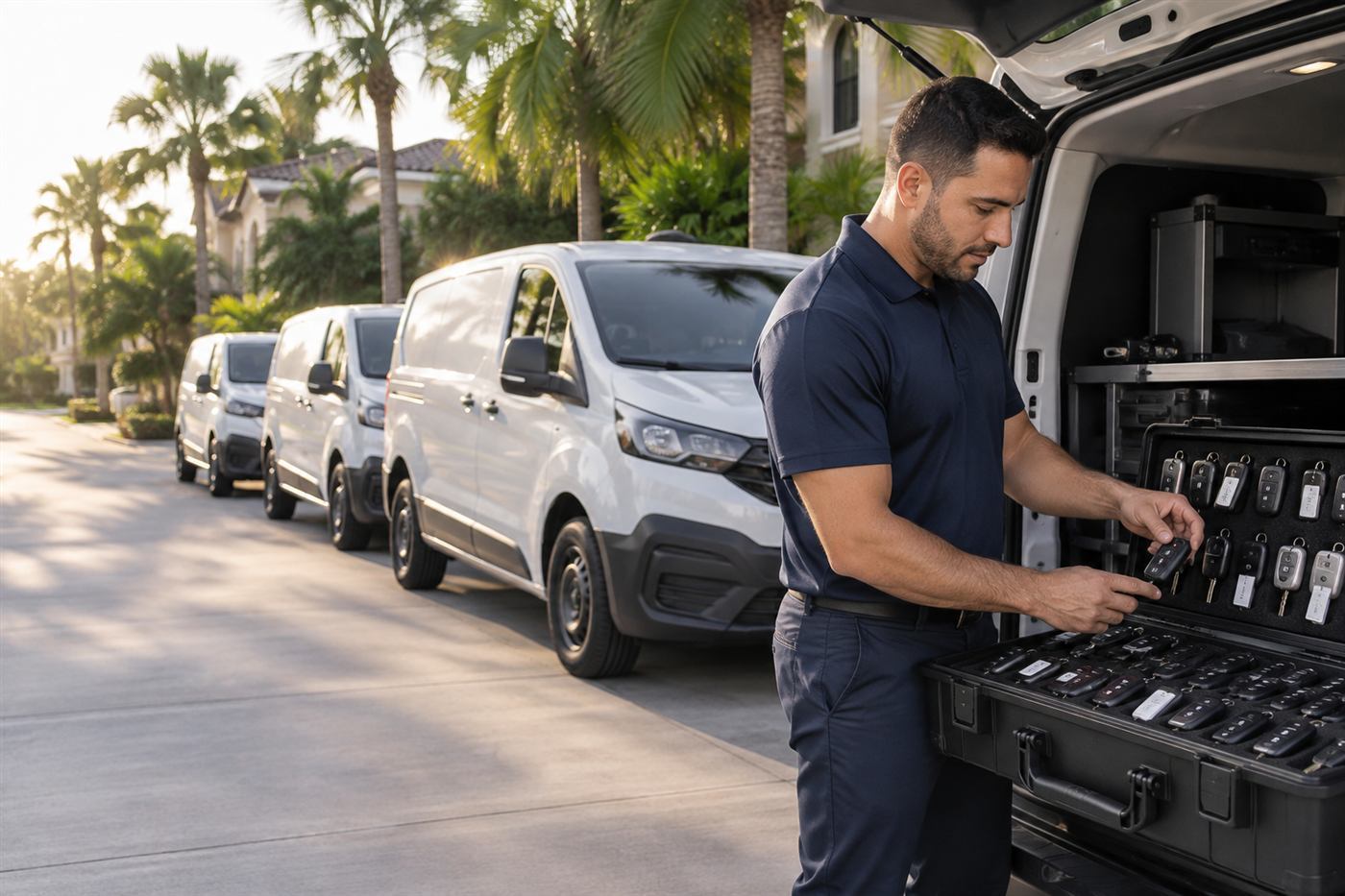
If you lost your only car key and the vehicle is parked at home or at work, a locksmith can often come to you, cut and program a key at the vehicle, and leave you able to drive. A dealership usually needs the vehicle to be brought to the service department, which may mean arranging a tow. For many common makes and models, that difference in logistics is the biggest reason people choose a locksmith.
A dealership has a clear advantage in a few situations: very new models whose security data has not been released to independent shops, some luxury and European makes that need factory tools, and vehicles still under certain manufacturer programs. In those cases, the honest answer is that the dealer is the only option, or at least the more certain one. A responsible locksmith will tell you so on the phone rather than take the job and fail.
This page is not meant to push you toward one choice. It is meant to give you the facts so you can decide. Both routes can produce a key that works. What differs is how the key reaches you, how long it takes, what you are asked to bring, and which vehicles each route can serve.
Towing and getting the car to the key
The biggest practical difference is where the work happens. A dealership programs keys in its service department with its own equipment. If the car cannot be driven because you have no working key, it has to be moved. That usually means calling a tow service, paying for the tow, and then waiting at the dealership. If you are far from the dealership, or your vehicle is parked in a tight garage or on a street with limited access, the tow itself can be a headache.
A mobile locksmith brings the cutting and programming equipment to the vehicle. The work happens in your driveway, at the office lot or wherever the car is. That removes the tow from the plan and often saves a day. Our page on car key replacement describes how that visit works.
There are limits. A locksmith visit works best when the vehicle is somewhere a technician can safely reach and work, with room for the tools and some light. A car in a locked parking structure with limited access, or on a roadside with heavy traffic, may call for different planning. And a few vehicle models truly need the shop environment, which a technician can tell you about on the phone once they know the make, model and year.
If towing to a dealer is on the table, ask the dealer what they need when the car arrives, and ask whether they will cut and program the key the same day. Policies differ, and some dealerships order a key blank and ask you to come back.
Scheduling and waiting time
Dealerships generally work by appointment during business hours, and their key work competes with repair and maintenance jobs in the same shop. If the service department is busy, you may wait. If the key blank must be ordered from the manufacturer, the wait can stretch over several days. If you lose your key on a weekend or in the evening, a dealership may not be an option until the next working day.
A locksmith works on a different pattern. You call, describe the situation and agree on a plan. For many vehicles the technician can carry the common blanks or fobs with them, and for others they need to source the part, which they will tell you about. We do not promise any particular arrival time, because it depends on location, traffic and the technician's schedule. What we can do is give you an honest picture on the phone.
Whichever route you choose, think about your own schedule. If you need the vehicle for work tomorrow morning, ask each option what is realistic and when. If you can wait a few days, a dealer's order may be fine. A clear question gets a clear answer: when will I have a working key in my hand?
Remember that a rushed decision is a risk too. Our guide on what to do when you lose your car key suggests a calm order of steps so you are not forced into the first option you find.
Where the keys and parts come from
A dealership orders original equipment keys and fobs from the manufacturer. These are made for the vehicle and carry the maker's branding. A locksmith may use original equipment parts where they are available, and may also use aftermarket keys and fobs from reputable suppliers. Both can work well. The difference is in the details.
Original parts tend to match the look, feel and features of the key you lost, and they may be required for certain newer vehicles. Aftermarket parts may be a different shape, may lack some features such as a specific remote button layout, and in some cases may use a different quality of battery or casing. Quality varies by supplier, which is why it is worth asking a locksmith which type they plan to use and what the differences are for your vehicle.
Our page on aftermarket key problems explains the issues that can come up when a poor quality key is used. The takeaway is not that aftermarket keys are bad, but that you should ask what you are getting. If a part is not of the quality you want, say so, and ask for alternatives.
Another point is the vehicle's key limit. Some vehicles accept only a certain number of programmed keys. Whoever programs yours should check how many are already registered and tell you how many slots are left, so you do not use them all unawares.
When the dealer is the only option
There are real cases where a locksmith cannot help, and it is better to know them up front. Some very new vehicles use security systems whose programming data is only available to the manufacturer for a period after release. Some luxury and European makes use encrypted systems that require factory tools or a secure connection to the maker's servers. Some vehicles require a code that only the dealer can obtain after verifying ownership.
In these cases, a locksmith may be able to help partway, for example by providing a tow to the dealer or by helping with a door lock, but cannot complete the key. A trustworthy technician will say so as soon as they know the make, model and year. If anyone claims they can do anything on any car, treat that as a warning sign.
Dealers also have the edge when a vehicle is covered by a manufacturer warranty or program that includes key replacement, or when the key problem is a symptom of a larger electronic fault. If your car has a flashing immobilizer light that does not go away even with a working key, the issue may be in the vehicle rather than the key. Our page on the immobilizer light flashing explains how to tell the difference.
When you call us, give the make, model and year, and ask directly whether the job is one a locksmith can do. If it is not, you will be told, and you can go straight to the dealer without wasting time.
Proof of ownership applies to both
Both a dealer and a locksmith need to know that the person asking for a key is entitled to it. This is a protection against theft. Expect to show registration or title and a matching photo ID. Dealers may also look up the VIN in their records, and may ask for additional documents if the vehicle is leased or financed.
Our guide on proof of ownership for a car key lists what is commonly asked for. The key point for this comparison is that the requirement is similar. Neither route lets you skip it, and anyone who offers to skip it deserves caution.
If you do not have the paperwork with you, ask what alternatives are accepted. A copy of the registration stored on your phone or an insurance card may be enough in some cases, though policies vary. A locksmith can tell you on the phone what they will accept, which lets you gather it before the visit rather than during it.
Where the vehicle belongs to a business, a lender or a rental company, the person who can authorize the work may not be you. In those cases, a short call to the owner or manager in advance saves a wasted trip, whichever route you take.
Questions to ask each option before you commit
Whether you call a dealership or a locksmith, a few simple questions will tell you a lot. Write them down before you call and note the answers.
- Can you make a key for my exact make, model and year, and have you done it before?
- Will the key be an original equipment part or an aftermarket one, and what is the difference for my vehicle?
- Where will the work happen: at my vehicle or in your shop?
- Is a tow needed, and if so who arranges it?
- How long will the whole process take from the moment I agree?
- What do I need to bring to prove ownership?
- How is the quote given, what does it include, and is there a service call or diagnostic charge?
- Does the new key come with programming, a remote and a cut blade, or are some of those extra?
Reading the quote carefully
Quotes can look similar and still describe different things. When a dealer quotes a key, ask whether the quote includes the blank, cutting, programming, tax and any diagnostic fee. When a locksmith quotes by phone, ask the same thing. Our guide on the locksmith service call charge explains why a charge for the visit exists and how it is normally described on the phone before dispatch.
We do not publish prices on this website, and we do not give price ranges. Quotes are given only by phone, because they depend on the vehicle, the key type and the location. Be cautious about any website that promises one fixed figure for every vehicle, because the real price depends on details that cannot be known until the key type is identified.
Compare like with like. A quote for a full smart key with programming is not comparable with a quote for a plain cut key. A quote from a dealer that includes a tow is not comparable with a mobile visit that needs no tow. Ask each source what is included, and make your decision on the whole picture rather than a single number.
A simple way to decide
Start with the facts of your situation. What is the vehicle, and how old is it? Is it drivable? Where is it? When do you need it? Do you have one key left or none? The answers narrow the choice quickly.
If the vehicle is a common make from the last couple of decades, is parked somewhere accessible, and you need it soon, a locksmith call is a reasonable first step. If the vehicle is brand new, a high end luxury model, or under a manufacturer program that covers keys, check with the dealer first. If you are unsure, call us and describe the vehicle. We will tell you honestly whether a locksmith can handle it.
If you still have one working key, make a spare now rather than waiting until you lose it. Our page on spare car key programming explains why that is so much easier than starting from nothing.
When you are ready to talk it through, call. Tell us the make, model and year, what keys you have, and where the car is. We will answer plainly, and if the dealer is the better route for your vehicle, we will say so.
Questions people ask
Is a locksmith key as good as one from the dealer?
It can be. A locksmith may use original equipment parts or reputable aftermarket ones, and either can work when programmed correctly. Ask which will be used and what differences to expect, such as button layout or case quality. For some new or luxury models, only the dealer can supply and program the key.
Do I have to tow my car to a locksmith?
Usually not. A mobile locksmith brings the cutting and programming equipment to the vehicle, so the work happens where the car sits. Some models truly need shop tools, and the technician can tell you that on the phone once they know the make, model and year. A dealer usually needs the car brought to the service department.
Which is faster, the dealer or a locksmith?
It depends on the vehicle and the day. A dealer may need to order the key and work around its repair schedule, while a locksmith can often work at the vehicle. We do not promise any arrival time. Ask each option when you will have a working key in hand, and compare the answers.
Will a locksmith need proof that the car is mine?
Yes, and so will a dealer. Expect to show registration or title and a matching photo ID. Leased or financed vehicles may need extra paperwork from the lender. Anyone who offers to skip the ownership check is not protecting you, so be cautious if that happens.
Can a locksmith program any car key?
No. Many common makes are within reach, but some very new or encrypted systems need factory tools or manufacturer data. A trustworthy technician will tell you early if your vehicle is one of those and send you to the dealer rather than take the job and fail.
How do I get a price from you?
Prices are given by phone only, after you describe the vehicle and the key type. We do not publish prices or ranges online. For complicated jobs, an on-site visit may be needed, and the service call charge for that visit is explained before anyone is dispatched. Call with the make, model and year ready.
Describe the situation by phone and we will tell you what the job involves. Quotes are given by phone. Jobs that cannot be quoted without seeing them need a technician on site, and the service call charge is explained on the phone before anyone is dispatched.
(844) 715-0800Related pages
Written by Claude (AI) (AI) for 24/7 Locksmith USA.