How a call works in South Carolina
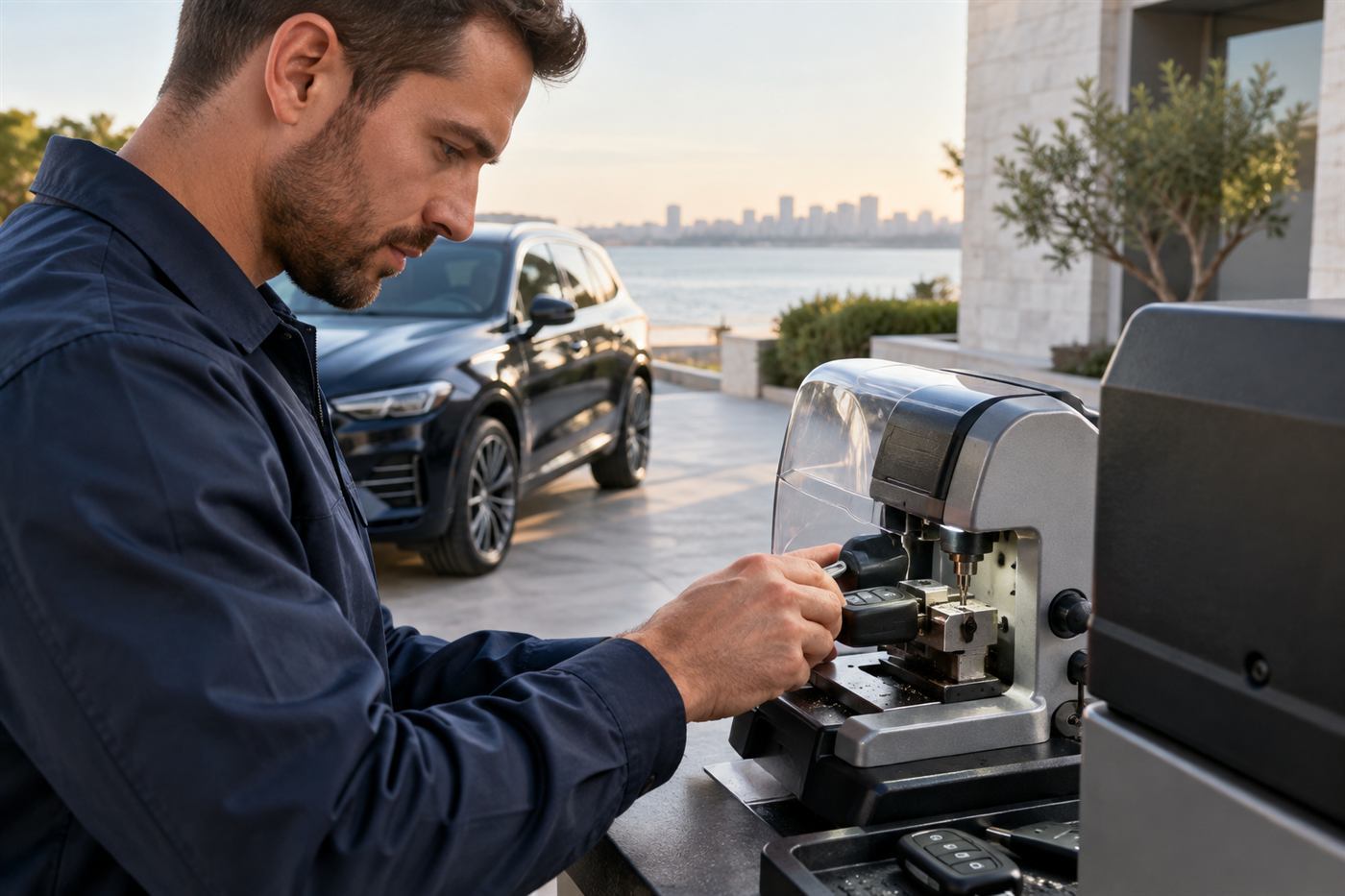
Every job starts with a phone conversation. You tell us where the vehicle is, what happened, and the make, model and year. We ask whether you have any working key, whether anyone or any animal is inside the car, whether you are on a public street or private property, and whether you can show the vehicle is yours. Those answers tell us what the job involves and whether a technician must see the car.
Quotes are given only by phone. We do not post prices, because a simple door lockout on an older car and programming a new proximity key for a recent model are different jobs. For complicated work, we may explain that an on-site visit is needed before a firm number is possible. A service call charge applies when a technician is dispatched, and we explain it before anyone is sent so there is nothing unexpected at the vehicle.
We do not promise arrival windows. Bridges, tidal roads, summer beach traffic and storm closures make any fixed promise dishonest. What we do promise is a clear answer on the phone about whether and how we can help where you are, so you can decide on your next step with real information.
The 24/7 in our name describes the idea of the service, not a technician at every hour in every place. If a person, child or pet is locked in a vehicle in South Carolina heat, call 911 first. Emergency crews are the right call, and we can help with the key once everyone is safe.
Charleston: humidity, salt and narrow historic streets
Charleston's peninsula is a place of narrow streets, historic buildings and tight parking, surrounded by water and marsh. Moisture is the constant theme. The air is humid for much of the year, and salt rides in on every breeze. Together they are hard on anything metal or electronic. A key fob carried in a damp pocket can pick up corrosion on its battery contacts, and a door lock that has seen years of salt air may feel gritty long before it fails.
Street parking downtown is limited, and many residents rely on it. A lockout on a narrow one-way street, with traffic behind and a parking officer nearby, is a particular kind of stress. If you can, tell us the exact block, the cross street and any sign or landmark. Be honest about whether the car is blocking a driveway or a loading zone, because that affects how long it can stay put and how a technician can work around it.
Tidal flooding is another local reality. Heavy rain at high tide can put water in streets and garages, and a car parked in a flood-prone spot can suffer water damage, including to keys and door electronics. If your vehicle has been in standing water, do not try to start it. Check with your insurer, and if the key systems misbehave afterward, call us and describe what the car does. Our page on a car key that fell in water covers fobs that have been soaked.
For city specifics, see our Charleston locksmith page. Visitors and residents alike should know that historic districts sometimes have rules about vehicle access, and a parking garage may have its own process for outside vendors. Tell the garage staff a technician may come, and give us the garage name, level and access details when you call.
The Lowcountry: marsh, islands and long bridges
Beyond the peninsula, the Lowcountry spreads across islands, marsh and small towns linked by bridges and causeways. Distances look short on a map and feel long in traffic, and a single bridge closure can cut off an area. A technician traveling to a barrier island or a rural marsh road has to account for tides, bridge openings and summer congestion, which is another reason we avoid arrival promises.
Rural properties here often have long gravel or sand driveways and gates. If your vehicle is behind a gate, tell us how access works, whether there is an entry keypad and who can open it. Do not give gate numbers over the phone to a company you do not know. Ask whether the technician can be met at the gate by someone you trust.
Humidity affects keys in quiet ways here too. Keys on rings with many items wear the ignition cylinder faster, and in damp air the wear comes with a little corrosion. A key that starts to stick is telling you something. Do not force it. Our page on a car key that will not turn explains the usual causes, and ignition cylinder replacement covers what happens when the cylinder itself is worn.
Boats, trailers and marine gear add their own locks. If you use a trailer hitch lock, a toolbox or a storage locker with a key you cannot find, describe the hardware. Some of these can be rekeyed or replaced, and others need a manufacturer part. Our page on RV and trailer locks covers common questions.
Myrtle Beach and the Grand Strand: visitors and rental cars
The Grand Strand draws a large crowd every summer. Families arrive by car and stay in condos, hotels and rentals, and the roads fill with out-of-state plates. Beaches, boardwalks, amusement areas and golf courses mean keys spend time in swimsuits, beach bags and the surf. A fob dropped in the ocean is a common story, and sand in a key ring does no favors to a door lock.
Rental cars add another layer. A rental belongs to a company, and its keys may be electronic and expensive to replace. Before you call a locksmith, check your rental paperwork or app for a roadside number, since many companies handle lockouts themselves and may require that any work be authorized. Our rental car lockout guide explains the order of steps. Do not allow anyone to drill or force a rental vehicle, because damage becomes your responsibility.
Visitors are also vulnerable to bad operators. A stranded driver far from home, with children and luggage in the car, is exactly the person a dishonest company hopes to find. Ask for the company name, the technician's name, the service call charge and what it covers, and do not agree to work until you understand the quote. Our guide on locksmith scam warning signs describes the patterns.
Plan ahead if you are visiting. Carry a spare key somewhere other than the car, such as with a companion, and make sure your roadside plan or insurance covers lockouts. Check pockets before you leave the beach. Our guide on insurance and roadside assistance for lockouts explains what to check before a trip.
Hurricane season and flooded vehicles
From late summer into autumn, South Carolina is exposed to tropical storms and hurricanes. Preparation and recovery both touch car keys. Before a storm, people evacuate in a hurry. Keys, documents and spare fobs get packed or left behind, and a car may be parked in a garage, a lot or a driveway that later floods. Our guide on hurricane season lock and key prep explains what to do before a storm, including where to keep spares and documents.
After a storm, floodwater is the main danger to vehicles. Salt or brackish water enters door electronics, ignition systems, control modules and key systems. Even a car that seems to dry out can develop faults later. If your vehicle has been in standing water, do not try to start it. Contact your insurer and a qualified mechanic. If your key or fob has been in the water, treat it as compromised and call us for advice.
Evacuation also leaves people far from home with their keys in one place and their car in another. A driver who evacuated to another city and lost their only key faces an all-keys-lost problem far from their documents. Keep copies or photos of your registration, title and insurance in a place you can reach from anywhere, because proof of ownership is required before a key is made.
After a storm, locks and keys can also be affected by debris, wind-driven sand and damaged doors. If a lock sticks after a storm, do not force it. Call and describe what you see. If your home or business was damaged, see our page on after break-in lock repair for the questions to ask about securing doors.
Greenville, Spartanburg and the Upstate
The Upstate has a different character. It is a region of foothills, growing cities and manufacturing, with cooler winters than the coast and a busy commuter flow along the interstates. Many residents drive newer vehicles and spend long hours behind the wheel, and the area's industrial base means plenty of work trucks, vans and fleet vehicles.
Cooler weather brings problems the coast rarely sees. An occasional hard cold snap can drain a fob battery and stiffen a lock. Moisture in a cylinder can ice over, and a key forced into a frozen lock can snap. Do not use force, and do not pour hot water on a frozen lock, because the water can turn back to ice and damage the finish. Warm the key gently in your hand and call us for advice.
Workplaces here often have large parking lots, and a lockout in a plant or office campus is a common call. Give us the company name, the lot, the row or a landmark, and whether a security desk needs to be told. If you manage a fleet, our page on fleet locksmith service explains how spares and records can keep vehicles on the road. Our guide on key control basics for business owners covers tracking.
Foothill roads, lake areas and trailheads bring the same issues found in other mountain regions: keys lost on hikes, fobs dropped in the water and cars parked far from help. If you are in a remote spot, tell us the road, the nearest town and any landmark, and share a location pin if you can. We will explain honestly what is realistic.
Columbia, the Midlands and summer heat
Central South Carolina is hot for much of the year. Cars parked outside in the Midlands can reach very high interior temperatures, and the effect on key fobs is predictable: warped cases, weakened batteries and reduced range. Leaving a fob on the dashboard or in a cup holder is the most common mistake. Keep it out of direct sun and avoid leaving a spare in the vehicle.
Heat shortens battery life. A fob battery that lasts a long time in a cool climate may need replacing more often in the South. If your fob begins to need several presses, or has to be held close to the car to work, change the battery before it fails. Our guide on how long key fob batteries last explains the signs, and how to change a key fob battery shows the steps.
College campuses and state offices bring large parking facilities and many commuters. Students who share cars or live far from home may have only one key. A parent arranging help from far away should know that we confirm ownership before making a key, so the documents must match the vehicle owner. Our page on college student and dorm lock safety offers sensible habits.
Hot weather also raises the stakes of a lockout. If a person or pet is inside a closed vehicle, call 911 immediately. Do not wait for a locksmith. If you are locked out with no one inside, move to shade, drink water, and call. Do not stand on hot pavement for long, and do not try to break a window.
Key types, spares and being ready for a replacement
South Carolina roads carry everything from older farm trucks to new hybrids. Knowing your key type helps any call go quickly. A basic metal key has no chip. A transponder key has a chip in the head that the car must recognize. A laser-cut key has a groove milled along the blade. A proximity key lets the car start by button when the fob is nearby. Our guide on types of car keys explained shows how to tell them apart.
Replacement differs by type. A basic key is cut. A transponder key must be cut and programmed. A proximity key must be paired to the car's computer using the right equipment for the make. If you describe the key and the car, we can usually explain on the phone what is involved. Our guide on how car key programming works covers the process.
A spare key is the most sensible purchase a driver can make. A second key made while the first works is simpler than an all-keys-lost job. If your car has only one key, think about a spare now. See spare car key programming.
Be careful with online blanks that look right but have the wrong chip or frequency. Ask us before buying, and tell us on the call if you already have one so we can check whether it can be made to work.
When every key is lost
Without any working key, a technician has to cut a new key from the vehicle's identification number and program it to the car. On many vehicles this can be done at the car, though some take longer and some need extra steps. That is why we ask for the make, model and year before we say what is possible.
Gather your details before calling. The VIN is on the dashboard near the windshield on the driver's side, on the door jamb and on your registration and insurance documents. Have a photo ID and proof of ownership such as a title, registration or insurance record in your name. Our guide on how to find your VIN shows where to look.
We verify ownership before making a key. That check protects honest owners from someone else driving away with their car. If you cannot show the paperwork at the vehicle, tell us on the phone, since there may be other ways to confirm. See proof of ownership for a car key.
If your keys were lost somewhere they could be found by a stranger, ask us about reprogramming the vehicle so the missing keys no longer start it. The details depend on the make and model. For the full service, see all keys lost service.
Choosing a locksmith and preparing to call
Lockouts happen at bad moments, and dishonest operators count on that. A local-sounding listing may route to a call center, and a low phone quote can become a much larger bill at the curb. Ask for the company name and the technician's name. Ask what the service call charge covers. Ask whether the phone quote is the amount for the work described. Our guide on questions to ask a locksmith before dispatch lists more.
We make no claim about credentials on this page, and we encourage you to check any locksmith yourself. South Carolina sets its own rules for locksmith work, and a reader can ask a company for its details and check them with the proper state office. Our page on how to verify a locksmith's credentials explains how.
Before you call, know your exact location, the make, model and year, and whether any key works. Have a photo ID and proof of ownership ready. Keep your phone charged and find a safe, shaded spot. Our checklist on how to prepare for a locksmith visit covers the rest.
If you are in South Carolina and need help with a car key, a lockout or a lost fob, call. Tell us where you are and what happened, and we will explain what is realistic and what happens next before anything is arranged. A service call charge applies when a technician is sent, and we explain it on the phone first.
Questions people ask
Do you list prices for South Carolina service?
No. Quotes are given only by phone after we know the vehicle and what has happened. A simple lockout and a new proximity key are very different jobs. Some work needs an on-site visit before a firm quote. A service call charge applies when a technician is sent, explained before dispatch.
Can you promise how soon someone will arrive?
No. Bridges, tides, beach traffic and storms vary too much for an honest promise. When you call, we tell you plainly whether we can help at your location and what is realistic. If anyone is in danger inside a vehicle, call 911 first and let emergency crews respond.
Does humid, salty air really damage car keys and locks?
Yes, over time. Moisture and salt corrode fob battery contacts and can leave grit in locks. A key that drags or a fob that works only sometimes is an early warning. Do not force a stiff key. Call for advice before it snaps or stops working.
My car was in floodwater. Can the key still be used?
Do not try to start the car. Floodwater can damage electronics, including key systems. Contact your insurer and a qualified mechanic. If the key or fob was soaked, treat it as compromised and call us, describing exactly what happened and what the car does.
I am visiting and locked my keys in a rental car. What first?
Check your rental paperwork or app for a roadside number, because many companies handle lockouts and may require authorization for any outside work. If you want our help, call with the make, model and year, and never let anyone drill or force a rental vehicle.
What do I need if I lost every key to my car?
Have the VIN, a photo ID and proof of ownership such as a title, registration or insurance record in your name. We check ownership before making any key, which protects honest owners. If you do not have the paperwork at the car, tell us on the phone.
Describe the situation by phone and we will tell you what the job involves. Quotes are given by phone. Jobs that cannot be quoted without seeing them need a technician on site, and the service call charge is explained on the phone before anyone is dispatched.
(844) 715-0800Related pages
Written by Claude (AI) (AI) for 24/7 Locksmith USA.