
What we handle in Orlando.
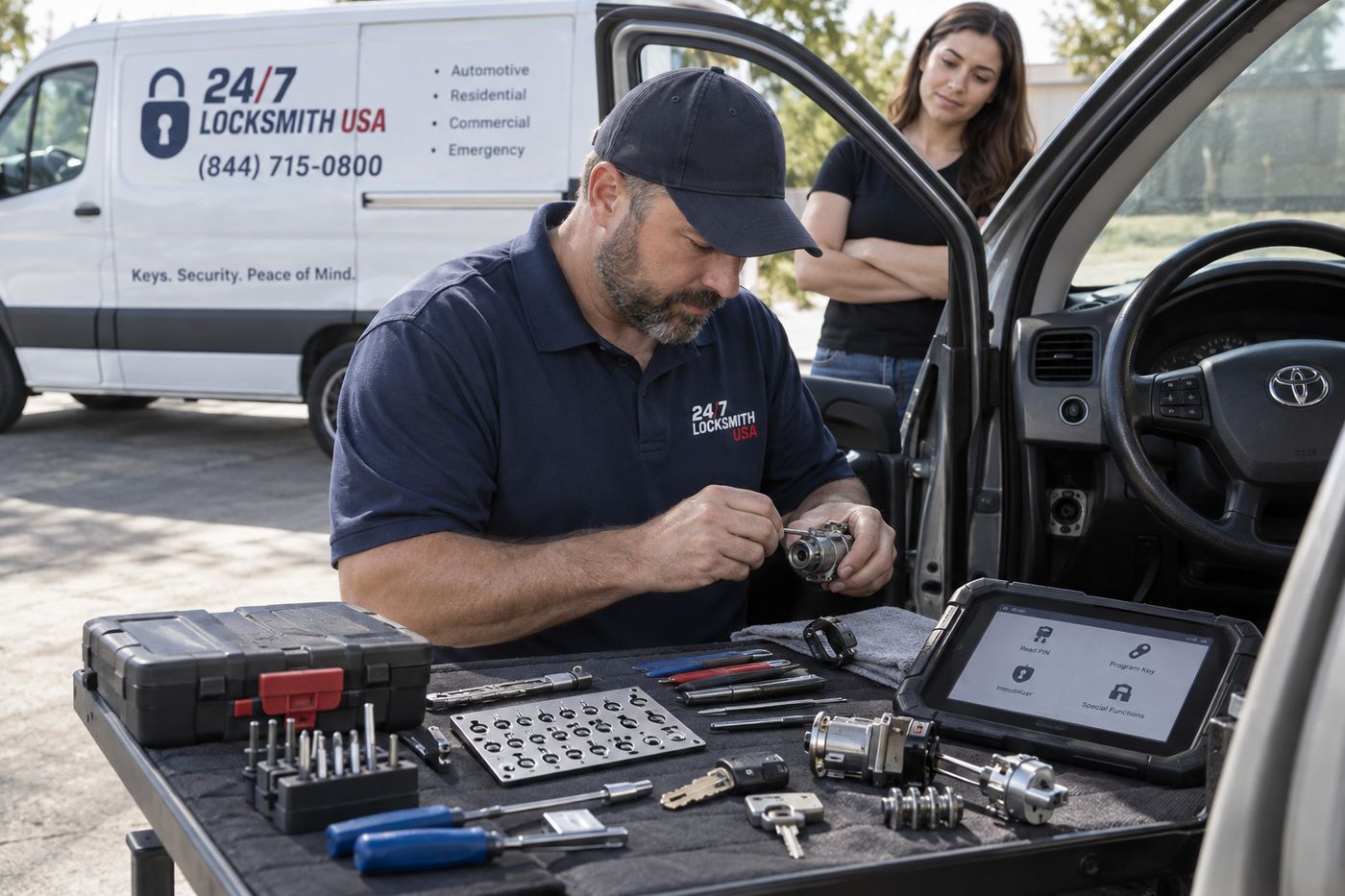
One mobile team across Orlando, residential, automotive and commercial.
Marine & Dock Hardware
Corrosion-resistant cylinders and padlocks for boats, dock boxes and waterfront storage.
Historic & Period Hardware
Mortise locks and original hardware serviced rather than ripped out of a period door.
Impact Door & Storm Hardware
Multipoint locks and hardware on impact-rated doors adjusted, repaired or replaced.
High-Security Cylinders
Medeco and Mul-T-Lock cylinders for doors that need genuine key control rather than hardware-store pins.
Safe Opening & Servicing
Locked-out safes opened, and re-combinated where the model allows it.
Gate & Access Hardware
Pedestrian gates, keypads and gate locks for gated communities and fenced yards.
Locks in Orlando: what actually goes wrong.
Orlando's housing is young by Florida standards - a 1995 median year built and 43.4% of units built since 2000 - so the local lock population skews toward builder-grade standard-bore hardware and, in newer subdivisions and rental communities, electronic and keypad locks rather than the pre-war mortise work that dominates Tampa's or Jacksonville's older districts. Being inland, salt corrosion is not the driver here; summer thunderstorm and lightning activity affecting powered access hardware is. ACS 2024 1-year data give Orlando a median year built of 1995, with 43.4% of units built in 2000 or later and only 13.6% built before 1960. Near the water, standard plated cylinders corrode from the inside out; solid brass or marine-grade hardware lasts several times longer for a small difference in price. The city is inland, roughly at the center of the peninsula, so it sits outside FDOT's half-mile "Extremely Aggressive" chloride band that governs coastal hardware corrosion; the dominant hardware stressors here are heat, humidity and thunderstorm activity rather than salt. NWS lightning climatology documents the peninsula's summer maximum in cloud-to-ground flash density, which is the practical risk for powered access control, gate operators and smart locks in Central Florida. Single-family detached units are 32.1% of the stock, with 8.5% attached. The pre-war minority is concentrated in the city's six historic preservation overlay districts: Lake Eola Heights (Colonial Revival, Craftsman, Mediterranean Revival, Mission Revival 1905-1925, Art Deco 1920s, Minimal Traditional, frame vernacular) and Lake Lawsona (bungalows and Craftsman "from 1911 to the 1950s"), so most of the city's doors are late-20th-century standard-bore units and the historic exceptions are geographically contained.
A city of people passing through and settling in
Orlando has a mix of residents, newcomers and visitors that few places match. At any moment, many people are driving cars they have only just met, staying in rooms they will soon leave, or moving into homes they have not yet made their own. Each of those situations creates its own kind of lock and key trouble, and each is easier to solve if you know the shape of the problem before you call.
This page is general guidance for people in Orlando. It does not describe any particular hotel, community, parking area or business, and it makes no claim that the company has worked at any specific address. It focuses on situations that are common in a large, warm, busy Florida city.
The common thread is authority. Whether the vehicle is a rental, a borrowed car or your own, and whether the door is a hotel room, an apartment or a house, a locksmith needs to know that you are entitled to open it. Expect questions about ID, registration, a lease or a rental agreement. They are not meant to be difficult. They protect the people who own the cars and homes.
Having a little paperwork ready makes every one of these calls easier. A photo of your registration, a copy of your lease, the confirmation email for a rental or a utility bill with your name on it can each answer the authority question in seconds. Store those on your phone in a folder you can find when you are stressed, and ask a travel companion to keep a second copy so that you are not relying on a single device.
Rental cars and the lockout that ruins an itinerary
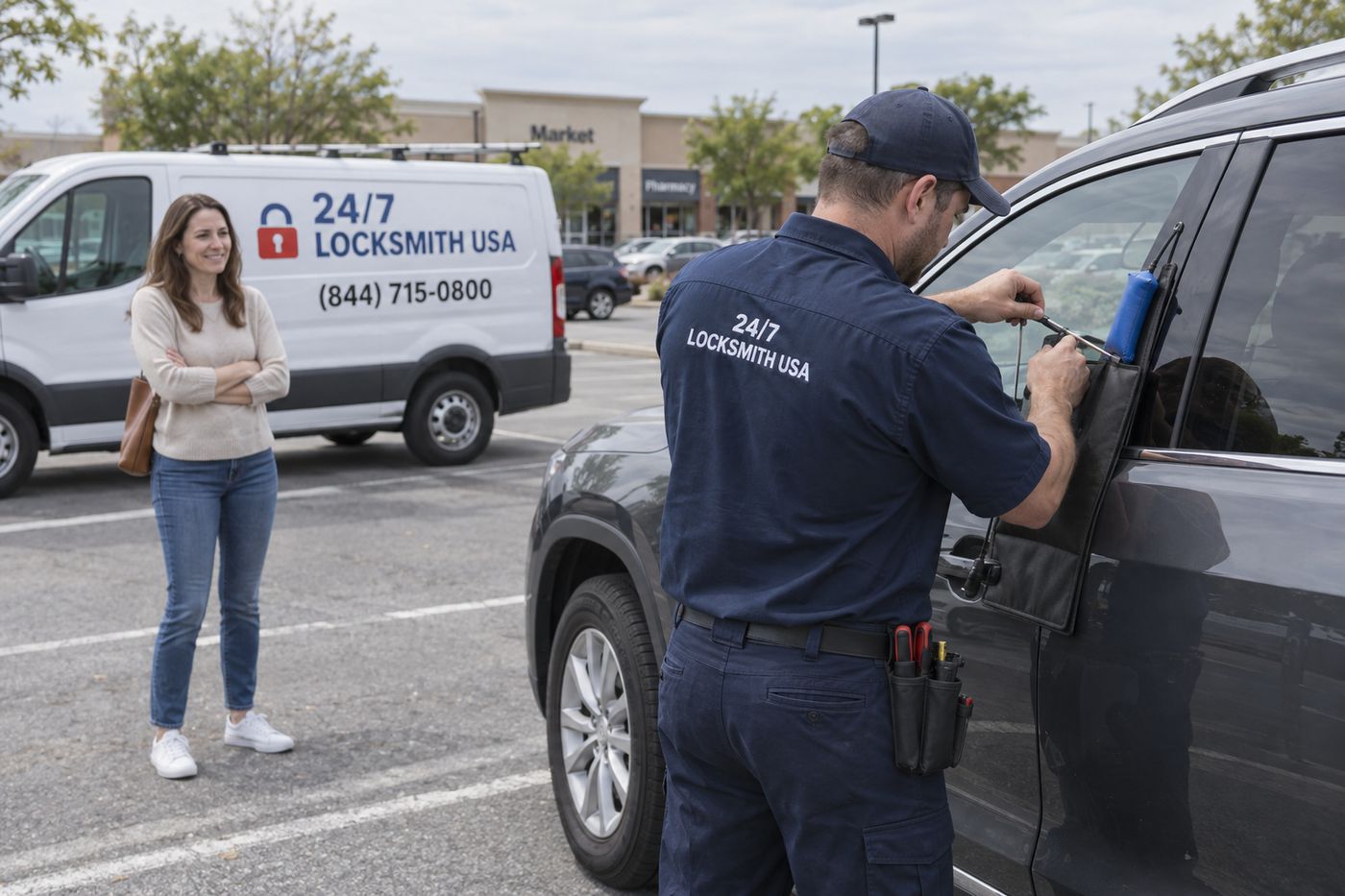
Rental cars are a major part of Orlando traffic, and rental lockouts are a classic vacation interruption. Keys go missing among beach bags, strollers and luggage, or get locked inside while someone unloads a trunk. Before you call anyone, check every door again, including the rear doors, and ask each person in your group where they last put the key.
Because a rental belongs to a company, the company has a say. Most have a roadside program, and that is often the first call to make. Our rental car lockout guide explains how the process works and how to avoid paying twice for the same problem. Keep the agreement handy, since a locksmith will usually want to see it along with your ID.
If you decide to call a locksmith, be clear about the car, the rental company and where you are. Ask how the service call charge works before you agree to anything, and ask whether the rental company needs to approve the work. Taking five minutes to sort out the authority question may save a longer delay later, particularly if the car has to go back before you leave town.
Inspect the car when the job is done. A competent technician opens a door without leaving scratches, bent weatherstripping or a door that no longer seals, but you should look anyway and mention any concern on the spot. Photograph the car if there is a dispute with the rental company later. Return the vehicle with all keys, including any spare, so that nobody is charged for a missing fob.
Hotels, extended stays and the keys you do not control
Hotel and short stay doors are controlled by the property, not by guests. If a key card stops working, the front desk is the right place to go, and a locksmith will not be called to open a room that you do not own. Card locks can fail when the card is demagnetized by a phone, or when the battery in the door is low, and the desk can issue a new card in a minute.
Extended stay and corporate housing sit between a hotel and an apartment. The management usually controls every lock, and tenants rarely have any right to alter them. If you are locked out of a unit, call the office first, because management typically holds a master key. That route is almost always simpler and less costly than calling an outside service for something you cannot authorize.
For your own safety in unfamiliar places, use the secondary locks on the door when you are inside, and do not prop it open. If a lock feels loose or does not engage, tell the desk and ask to move rooms. Do not try to adjust hardware yourself. A hotel can arrange its own repair, and your job is to keep yourself and your belongings secure while that happens.
Crowded lots, garages and the right way to describe where you are
Orlando has big parking areas, from garages with many levels to wide lots that all look alike at night. People often forget where they left the car, and then they lose the keys as well. When you call, give as much location detail as you can: a level, a row, a color of pillar, a nearby entrance or the name of a building.
A technician can only help if the car can be reached. Tell the dispatcher about gates, ticket systems and height limits, and be near the car when they arrive. If you are in a structure with poor signal, walk to a spot where your phone works and then describe the way back. It is better to lose five minutes finding signal than to have the technician circle the wrong level.
If you are alone and the lot is quiet, stay somewhere visible, and do not accept offers of help from strangers who say they can open the car. A friendly offer from a person you do not know can turn into a damaged door, a stolen item or worse. Wait for the person you called, ask for identification, and confirm that the company name matches the one you spoke to.
Apartments, turnover and who holds the keys
A large portion of Orlando residents rent, which makes apartment locks a daily topic. In most buildings, management controls the locks, and tenants are not permitted to change them without approval. That is a good thing in an emergency, because management usually has a way in, but it also means that you need to ask before you spend money on hardware.
When tenants move out, the lock should be rekeyed so that the previous keys stop working. Property managers handle this as routine, and our page on apartment and landlord locksmith service describes the typical requests. If you are a tenant who is worried about old keys, ask management in writing whether the lock was changed after the last occupant left.
If you are locked out and cannot reach management, a locksmith can help, but you will be asked to show that you live in the unit, often with a lease, ID or a bill showing your address. Be ready for that request. It protects every other resident of the building from a stranger who might claim the unit as their own, and it is a normal part of the process.
Roommates are a special case in a city with so many shared homes. When one person moves out, the others should think about whether that person still holds a key, and whether everyone agrees to rekey. Settle in advance who pays and who keeps the new keys, and write the answer in a message so that nobody remembers it differently later. Disputes over keys are common, and they are easy to avoid.
New homes, builder keys and the first rekey
Newer houses are common in growing parts of central Florida, and they are often sold to buyers from other places. A new house often has builder hardware, and many people who worked on it had keys during construction. Subcontractors, inspectors and agents may all have held one. Those keys might still open your door even though you have never met the people who carry them.
Rekeying is the usual response. It changes the internal pins of each lock so that all old keys stop working, and it keeps the hardware you already have. Our page on lock rekey service explains the process, and the home security checklist for new homeowners lists other items to cover, from the garage door to window latches.
Do not forget codes. A new home may have a garage keypad or a smart lock with a default code, and some buyers never change it. Update every code to something known only to your household. Also keep a note of which key opens which door, because builder keys are sometimes unmarked. That small bit of organizing pays off the first time you hand a spare to a family member.
If the house has a lockset that feels flimsy, ask the technician about upgrading at the same visit. A better deadbolt with a reinforced strike plate and long screws is a modest change that makes the front door much harder to force. Ask also about the door between the garage and the house, which is often the weakest door in the building, and about sliding doors, which need a proper latch.
Drivers who work from the car
Rideshare drivers, delivery drivers and tradespeople spend more time in their vehicles than most owners. For them, a lost key or a failed lock is not just a nuisance but a loss of income. They also tend to carry equipment, which makes theft a concern. A driver who works from a car should keep a properly made spare key somewhere safe and know the vehicle identification number by heart or in a note on the phone.
If you manage several vehicles, take a look at fleet locksmith service for ways to keep spares organized and to track who holds what. A shared log, even a simple one, makes it easier to answer the question of where every key is. When someone leaves the team, make sure their key comes back.
A worn key is an early warning. If a key is hard to turn or the ignition feels rough, replace the key before it breaks. Our page on worn car key symptoms describes what to watch for. A driver who loses a day of work to a broken key has paid far more than the cost of a timely spare.
Keep documents for the vehicle in a place you can reach without the vehicle. If the registration lives only in the glove box, a lockout means you cannot prove ownership until the door is open. Store a photo on your phone and a paper copy at home. This is also a good habit when a vehicle is registered to a business or a family member, because then the person on the phone is not the person named on the paper.
Smart keys, push buttons and proximity fobs
Many cars on Orlando roads start with a push of a button while the fob stays in a pocket. That convenience brings its own failure modes. A weak battery can leave the car unresponsive, a fob damaged by water can lose its connection, and interference sometimes confuses the car so that it fails to detect the key. Most of the time, the cause is simple.
When a smart key must be replaced, the work is done from the VIN with proof of ownership. Read about smart key replacement to see what information you will need and what the process involves. Have the registration, your ID and any working key ready. If the car has one working fob, bring it, since it can simplify the programming.
Do not leave the fob inside the car, even in a pocket of a jacket on the seat. With a proximity system, the car may lock itself when you walk away, leaving the key inside. Build a habit: step out, touch your pocket, shut the door. If you carry the fob in a bag, put it in the same pocket of the bag every time so that you always know where it is.
Valet parking deserves a caution. When you hand over a smart key, you hand over the car. Some drivers give the valet only the valet key if the vehicle supplies one, and keep the main fob. Check your owner's manual for what a valet key can and cannot do. A key that stays behind in someone else's pocket after you leave is a problem that no lock can solve.
Heat, storms and the small things that fail
Central Florida's hot, wet climate wears at hardware. Plastic fob shells crack, rubber buttons wear smooth, and batteries die more often than they should. Afternoon storms bring power flickers, which can confuse electronic locks and garage keypads. If a smart lock behaves oddly after a storm, replace the batteries and check that the door has not shifted before you assume the lock has failed.
Before the stormy part of the year begins, take an hour to go through every key and lock you rely on. Test each spare key, replace weak batteries and make sure everyone in the household knows where the spares live. Our hurricane season lock and key prep guide covers the details.
If a door sticks because the frame has swollen, do not force it or kick it. You can damage the frame, the lock and yourself. Describe the problem to a technician, who can often explain whether the issue is the lock, the latch or the door itself. A short call with clear details usually leads to a more useful answer than a long guessing game.
Shops, restaurants and event spaces
A city that hosts so many visitors has a lot of businesses with doors that open and close all day. Restaurants, retail stores, gyms and offices all depend on locks that work. When a key fails or a lock breaks, owners need to secure the premises and reopen as soon as it is safe. The first call should include the type of door, the nature of the failure and who has authority to approve work.
Keep a record of every key and who has it. Staff turnover is high in many service businesses, and a former employee who still has a working key is a risk. If you are unsure, ask about rekeying. See commercial locksmith service for typical requests and what to expect.
Do not forget the less obvious locks: the cash office, the storeroom, the delivery door, and the cabinet where spare keys hang. Treat every one of those as part of the same system. A clear policy about who may hold a key, and a habit of checking that back doors are locked at closing, prevents most of the problems that lead to emergency calls.
Choosing a company and keeping control of the visit
With so many companies advertising in a large metropolitan area, take a moment to learn the warning signs. Read how to spot a fake locksmith before you call, and keep it in mind during the call. A company name that changes between the ad and the greeting, a refusal to explain the service call charge, or a price that appears only after arrival are all signs to stop and call someone else.
A good call goes like this: you describe the problem, you are told how the service call charge works, and you get a phone quote. Ownership or authority is checked before opening, rekeying or programming. After the work, test the key or lock while the technician is there and ask for a clear explanation of what was done.
For wider background, the Florida page gathers information for the state, and neighboring pages such as Kissimmee and Winter Garden offer similar practical advice. Wherever you are, take a breath, give a clear location and keep your documents ready.
Common questions
What should I do first if I am locked out of a rental car?
Check every door once more, then look at your rental agreement for a roadside number. The rental company owns the car, so it often has a program for lockouts. If you call a locksmith, have the agreement and your ID ready, and ask whether the rental company needs to approve the work.
Can a locksmith open my hotel room?
Normally no. Hotels control their own locks and issue new key cards at the desk. If a card stops working, go to the front desk. The same applies to many extended stay units, where management holds a master key and tenants cannot authorize outside work.
Should I rekey a newly built house?
It is a sensible step. Contractors, inspectors and agents may have held keys during construction. Rekeying makes all earlier keys stop working while keeping your hardware. Also change any default garage or keypad codes so that only your household knows them.
How do apartment lock rules usually work?
Management typically controls the locks, and tenants need approval to change them. Rules vary by building, so ask your landlord what is allowed. If you are locked out, a locksmith will want to see that you live in the unit, using a lease, ID or a bill with the address.
Why does my push button car sometimes not detect the fob?
The usual causes are a weak battery, interference, or a fob damaged by water or a drop. Try a fresh battery first and hold the fob near the start button as your manual suggests. If it still fails, the fob may need replacement or reprogramming from the VIN.
What proof will I need for car key work?
Expect to show a government photo ID and a document tying you to the vehicle, such as a registration or title. The VIN is used to create or program the key. For a rental or a business vehicle, you may also need an agreement or a letter of authority.