What a service call charge is
When you ask a locksmith to come to you, someone has to drive a vehicle loaded with tools, key blanks and programming equipment to your location. That trip costs time and fuel, takes a technician away from other work and ties up equipment. The service call charge is the part of the price that accounts for getting a qualified person to your spot and beginning to assess your situation.
It is similar to the trip fee that plumbers, electricians and appliance repair services charge. In each case, the visit itself has a cost, and the work to fix the problem is a separate piece. Because the service call charge exists whether or not you proceed with the repair, it is something you should know about before you agree to a visit.
A clear explanation on the phone is a mark of an honest company. If the dispatcher avoids the topic or says the charge is a small amount that will be explained when the technician arrives, be careful. The time to hear about it is before anyone sets out.
What the charge typically covers
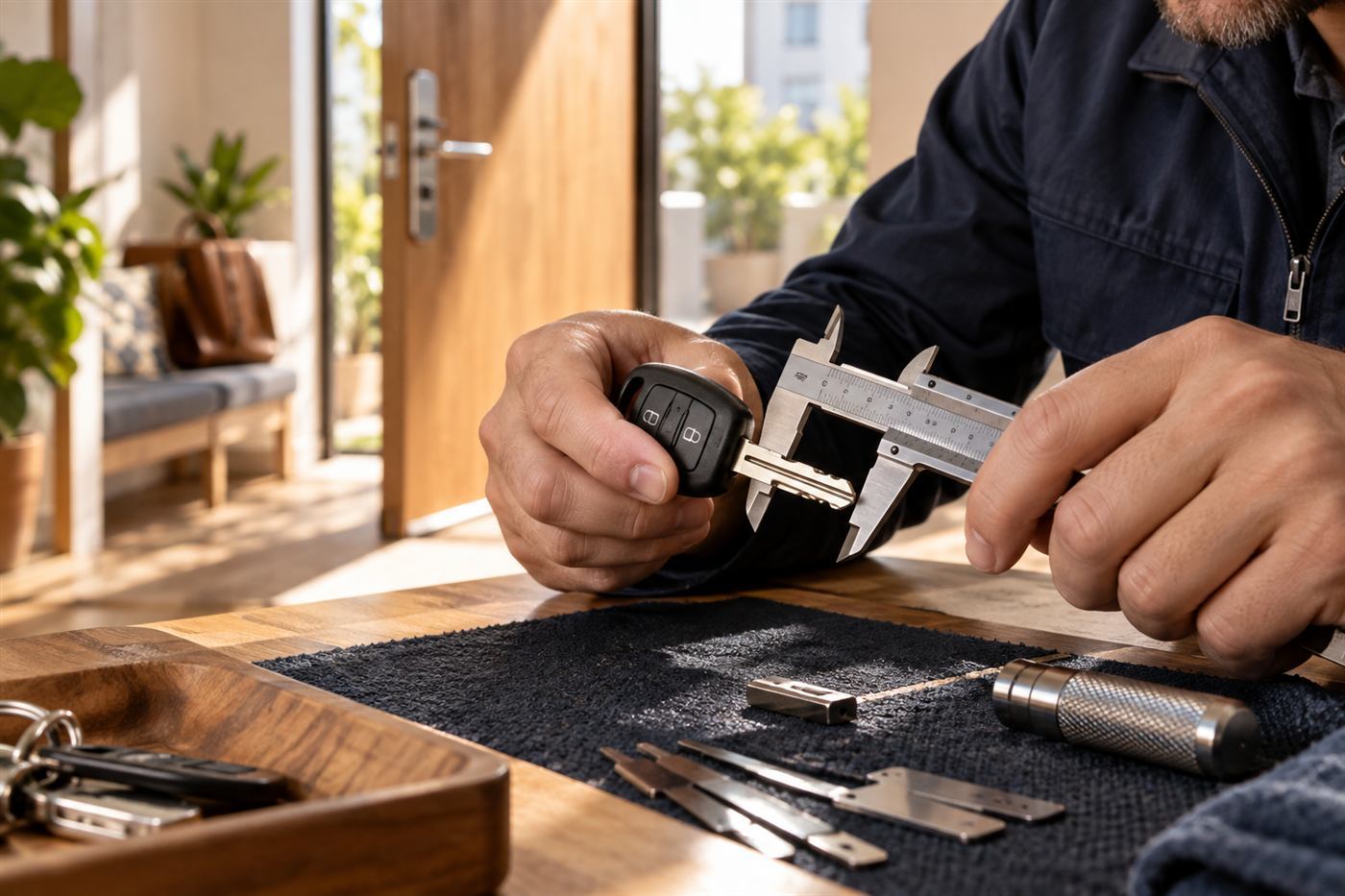
The service call charge covers getting the technician and their equipment to you and the time spent assessing the situation. In practice, that means the drive, the first look at the vehicle or the lock, identification and ownership checks and a clear explanation of the work needed. It does not automatically include the parts, the key cutting or the programming, which are part of the job itself.
Each company sets its own policy on what is bundled in and what is separate, so ask. Some include a short period of work. Others treat the service call charge as separate from every other item. Ask the dispatcher to describe in plain words what you pay for if the job goes ahead and what you pay if you decide not to proceed after the technician arrives.
The details are explained by phone, and we do not publish amounts online. Costs vary by the vehicle, the type of key, the lock and the situation, and a number on a web page cannot reflect your particular case.
- The trip to your location and the technician's time.
- The first assessment of the lock, vehicle or key.
- Identity and ownership confirmation.
- A clear explanation of the recommended work before it begins.
Why quotes are given by phone
Anyone can post a number on a web page, but a number without context can mislead. A locksmith quote depends on the make, model and year of the vehicle, the type of key, how many keys remain, whether a lock is damaged and how complicated the work will be. A shop that gives a firm figure without asking about these details is guessing, or is using a low number to get you to call and then adding to it later.
A phone conversation lets the dispatcher ask the right questions, listen to your situation and give a figure that reflects it. It also gives you a chance to ask your own questions. If the quote is clear and the explanation makes sense, you can decide with confidence.
That is why our approach is that quotes are given only by phone. You get an answer tailored to your vehicle or lock, and you hear the service call charge explained before dispatch. If the job is more involved than a phone call can settle, we say so plainly.
Why complicated jobs need an on-site visit
Some situations cannot be priced from a description. An all keys lost call on a smart key vehicle can involve special steps and authorization. A lock that has been damaged in a break in may reveal more problems once the door is open. A broken key in an ignition can be easy to extract or can involve a worn cylinder that needs more work. The only way to know for sure is to see it.
In these cases, the technician examines the vehicle or lock, explains what they find and gives you a firm figure for the work. You can then decide whether to go ahead. If you decline, the service call charge still covers the visit and the assessment, which is why it is explained in advance.
A responsible technician will not begin work until you understand and agree. If anything surprises you, ask for an explanation in plain words. A change in price should come with a specific reason, such as a hidden fault or a different key type than described, and never from pressure.
Questions to ask about the charge
A few simple questions bring the details into the open. Ask what the service call charge is and what it covers. Ask whether it applies if you decline the work after the technician arrives. Ask how the final quote is built and what could change it. Ask what payment forms are accepted. And ask whether the company will provide a written receipt that lists each item.
Write down the answers or ask the dispatcher to repeat them. If you feel uneasy, say so. A professional will respect that and give you a clear picture. If the answers are vague or change from one sentence to the next, you can hang up and call another company.
Our guide on questions to ask a locksmith before dispatch offers a longer list, including questions about business identity and vehicle verification.
Red flags around pricing
Locksmith pricing is a common source of complaints, and a few patterns appear again and again. One is a very low bait quote on the phone, followed by a much higher figure on site. Another is a refusal to explain the service call charge until the technician arrives. A third is pressure to pay in cash only, or to agree on the spot to a change that was not discussed.
Watch for vague business names that do not match what the technician shows. Watch for technicians who start drilling or replacing a lock before explaining why, when a less destructive approach might work. Our page on locksmith scam warning signs describes these patterns in more detail.
You are not obliged to continue if the situation does not match what you were told. Ask for a written explanation of any change. If you decline, ask what you owe for the visit, which should match what was explained on the phone.
How the service call charge fits with insurance and roadside plans
Some insurance policies and roadside assistance plans cover part of the cost of a lockout or a replacement key. If you have one, call it first and ask what it pays for, what it does not and which providers it uses. Our page on insurance and roadside assistance for lockouts explains what to ask.
If your plan sends its own provider, you may not pay a service call charge at all, but there may be limits on key types or on programming. Smart keys and all keys lost cases are often outside what a standard plan covers. A direct call to a locksmith can give you an answer for a situation your plan does not handle.
If you pay yourself and plan to ask for reimbursement, keep the written receipt and note the time of the call and the business name. Some insurers have their own forms and rules, and it helps to read them before the visit.
Examples of how the charge plays out
Consider a driver with a worn transponder key who wants a spare while the original still works. The dispatcher asks for the make, model and year, confirms that one working key exists and explains the service call charge. The quote for the spare is given by phone, since the situation is well defined. The technician arrives, checks ID and paperwork, cuts and programs the key and tests it. The final figure matches the phone quote.
Now consider a driver who lost every key to a push-button vehicle in a parking structure. The dispatcher explains that the job may involve extra steps, that an on-site look may be needed before a firm figure can be given and what the service call charge covers. The technician examines the vehicle, confirms what the model requires and gives a firm figure. The driver can then agree or decline.
A third case is a home lock that will not turn after a break in. The dispatcher cannot tell from the phone whether the cylinder, the strike or the door frame is damaged. The technician looks, explains the options and gives a quote for each. In all three examples, the common thread is that the charge was explained first and the figure for the work was agreed before the work began.
What a fair, clear process looks like
A good call begins with questions about you and your situation. The dispatcher asks about the vehicle or lock, the key type and where you are. They explain the service call charge and describe how the quote works. They tell you honestly whether the job is simple or complicated. They give the name of the business and describe what to expect on arrival.
On site, the technician shows identification, confirms your ID and paperwork and explains what they see. They give you a firm figure for the job, or explain why more information is needed. They begin work only after you agree. When finished, they test the result with you and provide a written receipt.
That sequence is not complicated, and you can expect it from any professional. If a company will not follow it, there are others that will.
- The dispatcher asks about your vehicle or lock and your location.
- The service call charge and the quote process are explained.
- The technician arrives, shows identification and verifies your ID.
- A firm figure is given before work begins.
- The work is tested with you and a written receipt is provided.
Keeping your own records
Whatever the outcome, a short record helps. Note the business name, the person you spoke with, the time of the call and what was said about the service call charge and the quote. After the visit, keep the written receipt and photograph it. If something goes wrong with a key or a lock later, those records show what was done and when.
A record also helps you compare. If you call two or three companies, a few lines of notes make the differences obvious. One may explain the charge clearly while another avoids the topic. One may ask careful questions about your vehicle while another quotes at once. The comparison is worth the extra minutes.
Finally, if you ever decide to dispute a charge, your notes and receipts are the foundation. Card issuers, insurers and consumer protection offices all start by asking what you were told and what you paid. Clear records make that conversation short.
Ready to talk it through?
If you want to understand what a visit would involve for your situation, call the number on this page. We will explain the service call charge, ask the questions needed to give you a quote and tell you honestly whether your job needs an on-site look.
You are never obliged to proceed after the call. Take your time, ask what you need to and decide with the facts in hand.
Questions people ask
Is the service call charge the full price of the job?
No. It covers getting a technician and equipment to your location and the initial assessment. The work itself, such as cutting a key, programming it or repairing a lock, is a separate part of the quote. Ask the dispatcher to explain how the two fit together so you know what to expect before anyone is sent.
Why will you not give a price on your website?
Price depends on the vehicle, the key type, the number of keys and the condition of the lock, which a web page cannot know. A number online could mislead you or lead to surprises later. Quotes are given only by phone so the answer fits your situation, and the service call charge is explained before dispatch.
What happens if I decline the work after the technician arrives?
The service call charge covers the trip and the assessment, so you would normally owe that amount even if you do not proceed. This should be explained on the phone before dispatch. Ask the dispatcher to confirm it so there is no surprise, and ask for a receipt for whatever you pay.
Can the quote change when the technician arrives?
It can, if the technician finds something that was not clear from the phone call, such as a different key type or a damaged lock. Any change should come with a specific explanation, and you can accept, ask questions or decline. Be cautious if the change is vague or pressured.
Is a very low phone quote a good sign?
Not necessarily. Some companies quote a very low figure to win the call and then add charges on site. A reliable quote follows questions about your vehicle and comes with an explanation of the service call charge. If a number seems too good for the situation, ask what is included and what might change.
Will my insurance or roadside plan cover the service call charge?
Some plans cover part of a lockout or a replacement key, with limits that vary. Call your plan first and ask what it covers and which providers it uses. Smart keys and all keys lost jobs are often outside standard coverage. If you pay yourself, keep a written receipt to submit for reimbursement.
Describe the situation by phone and we will tell you what the job involves. Quotes are given by phone. Jobs that cannot be quoted without seeing them need a technician on site, and the service call charge is explained on the phone before anyone is dispatched.
(844) 715-0800Related pages
Written by Claude (AI) (AI) for 24/7 Locksmith USA.