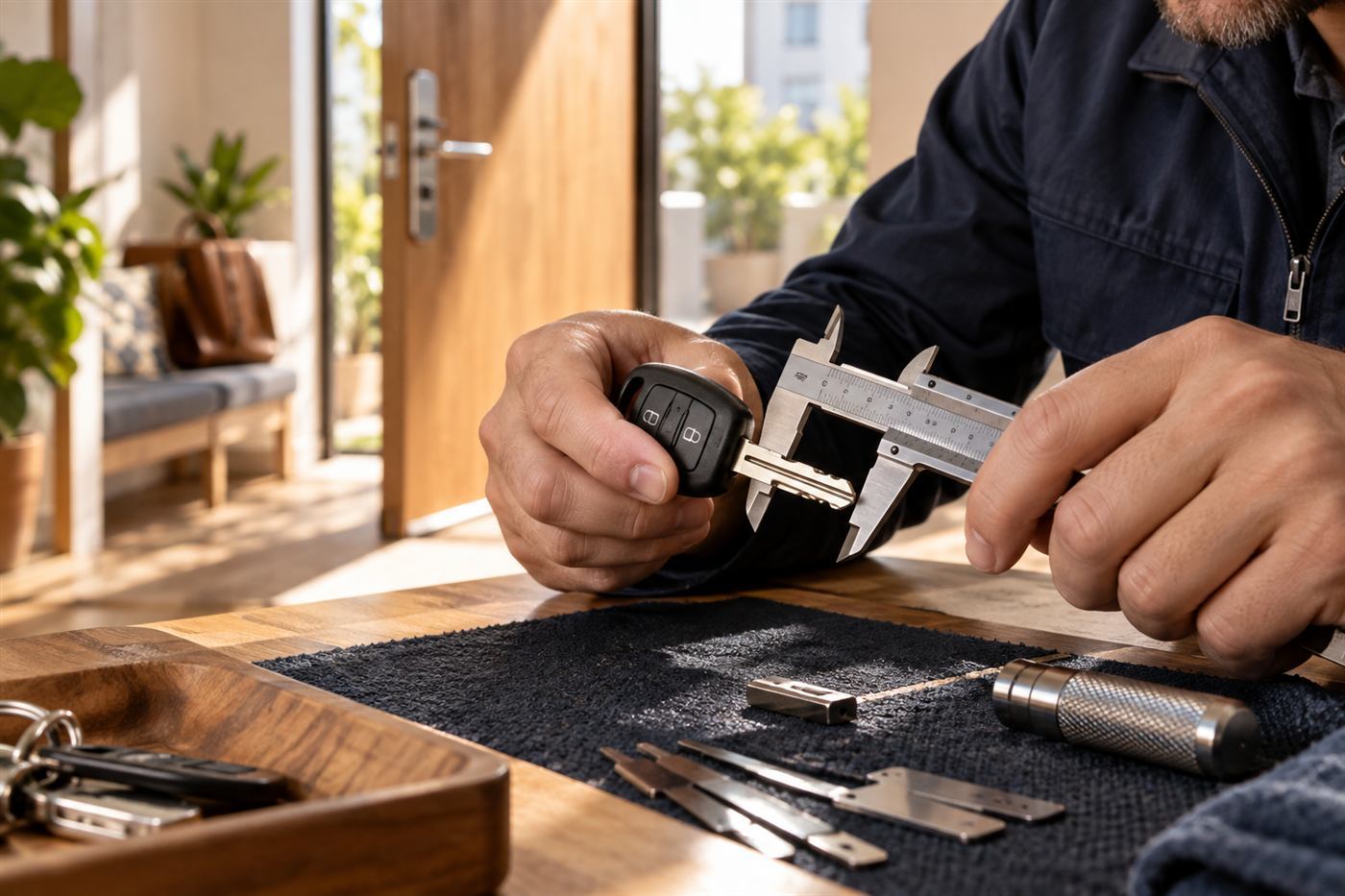
What programming means and why a fob can lose it
A key fob is not just a button and a battery. Inside is a small circuit board with a memory that holds a unique identity and, on most cars, a changing sequence that the car expects to follow. The car also holds a list of fobs it trusts. Programming is the process of adding the fob to that list so the two recognize each other. Without it, the fob can press buttons all day and the car will ignore it.
Fobs usually keep their identity through a battery change, since that identity is stored in memory that survives power loss. But some designs, particularly older ones and certain makes, lose their place in the rolling sequence if power is cut at the wrong moment, or if the fob is pressed many times out of range. The car then sees a signal it does not recognize and refuses it.
The car side can lose data too. A dead or disconnected car battery, a jump start gone wrong or a module replacement can leave the car with a blank or confused list. That is why fobs sometimes stop working right after a car battery swap, even though the fob itself is untouched. Knowing which side lost the pairing guides the fix.
Check the basics before assuming programming is lost
Most fobs that go quiet after a battery change have a simple installation issue rather than a lost pairing. Open the fob again and check that the battery is the correct type, sits the right way up, and that its contacts touch it firmly. A battery inserted upside down will do nothing. A battery that is slightly the wrong size can leave a gap. A battery that was already weak when bought, perhaps from a pack that sat for years, can fail immediately.
Look at the contacts for bent tabs, dirt or corrosion. Gently clean residue with a dry cloth if you see any. Do not scrape the metal or use liquids. Also check that the case snapped shut fully, since a loose case can press the board unevenly and make buttons unresponsive. Our guide on how to change a key fob battery shows the correct steps.
Test the fob near the car, with the car at rest and nothing else on. If the small light on the fob blinks when you press a button, the fob has power and is transmitting. If there is no light and no response, the problem is more likely the battery or the board. If the light blinks but the car ignores it, the pairing is more likely the issue.
- Confirm the correct battery type and direction
- Check contacts for bends, dirt or corrosion
- Snap the case fully shut
- Press a button and look for the fob indicator light
- Try near the car, then try the backup start spot
- Check whether a spare fob works
When a battery swap alone is enough
In a large share of cases, a fresh battery of the right type restores a fob completely, and nothing needs to be programmed. If the fob was weak before the swap, with short range and many presses needed, then it behaves normally with a good battery, you are done. If you changed the battery quickly, within a minute or so, and the fob worked right after, it never lost anything.
If a fob works on some doors or at short range only, try a different new battery before concluding something else is wrong. Batteries sold loose can be old or low quality. A fob that works with a new battery from a different pack was never a programming problem. It is a good habit to keep the old battery until the new one is confirmed.
Also test the other fob or the spare if you have one. If the spare works, the car is healthy and the issue is limited to the one fob. If neither fob works, the car side is the more likely cause, such as the car's battery, a fuse or the receiver, and the repair path is different. Our page on a car that will not unlock with the fob lists those other causes.
Simple resync steps and why the manual matters
Many cars have an owner-level resync that needs no equipment. Typical examples include inserting the key in the ignition and turning it on and off a set number of times, pressing the lock or unlock button in a particular order, or holding a button while the ignition is on. These routines differ widely between makes and even between model years of the same car.
Your owner's manual is the right place to look, usually under keys, remote or keyless entry. If your car supports an owner resync, the manual lists the exact steps and warns about limits, such as the number of fobs the car can store. Follow the steps exactly and do not improvise, since a wrong sequence can leave the car in a state that blocks further attempts for a while.
Do not buy a generic programming guide from an unverified source and follow it on a modern car without checking. Some online tips apply to older vehicles and do nothing on newer ones. Others suggest steps that clear all stored keys, leaving you with none. If your manual has no owner procedure, that is a clear sign that the car needs equipment to program a fob.
When the car needs diagnostic equipment
Most cars built in the last two decades need diagnostic equipment to add or relearn a fob. The technician connects a tool to the car's diagnostic port, enters the security session using the vehicle's information, and tells the car to accept the fob. On some cars the process takes only a few minutes. On others, particularly European and some luxury models, additional steps and online security checks are involved.
This is why proof of ownership matters. Adding a key to a car's security system is a sensitive step, since a new key can start the car. Reputable technicians ask for identification and registration or title before programming, and they record the work. Our guide on proof of ownership for a car key explains the reasons.
The process also differs depending on whether you have a working key. With an existing working key, adding a fob can be simpler. With no working key, the technician may need to create a new key from the vehicle's information, which is a longer job. Our page on key fob programming describes the common routes.
The difference between a fob and a transponder key
Cars use two separate systems that people lump together. The remote part, the fob buttons that lock and unlock the doors, is one system. The transponder, the chip that allows the engine to start, is another. A fob can lose its remote function while the chip still starts the car, or the reverse.
If your fob no longer unlocks the doors but the key still starts the engine, the transponder is fine and only the remote needs programming. If the fob unlocks the doors but the engine will not start, the chip is the issue, and our page on transponder key programming applies. If neither works, both may need attention.
Smart keys combine these functions in a single unit that communicates continuously with the car. For those, a lost pairing usually affects both entry and starting, and the fix is to program the fob to the car as a whole. Mention which functions still work when you call, since it tells the technician what to bring and what to test.
Things that can wipe a fob or the car's key list
Some events are well known for upsetting pairing. Replacing the car battery with the car's computers still powered can cause no trouble at all, while a long disconnect can reset some modules. Jump starts, especially if connected incorrectly, can spike voltage and scramble electronics. Water damage to a module or a fob can corrupt memory. Replacing an engine control module or a body control module usually requires the keys to be programmed again.
A fob that has been pressed repeatedly out of range, such as by a child playing with it, can drift out of sync on rolling-sequence systems. Leaving a fob in a hot car or near strong magnets can sometimes disturb sensitive designs. Dropping a fob rarely erases its memory, but it can crack the board, which is a different failure.
If your fob problem started right after some other event, such as a battery replacement at a shop, an accident repair or a module swap, mention it when you call. That timeline is a strong clue, and it may even mean the shop that did the work should have reprogrammed the fob. The technician can help you work out which explanation fits.
What happens during a programming visit
A technician arrives, confirms your identification and proof of ownership, and examines the fob and the car. They check the fob's battery and board, test the signal, and connect their tool to the car to see what the car has stored. They then program the fob using the method that suits your car. This may be done in minutes, though some vehicles take longer.
After programming, they test every function. Lock, unlock, trunk, panic and any remote start are all tried, along with starting the engine on cars where the fob also carries the chip. They will also test any other fobs you own, since some programming routines clear the stored list and require all fobs to be present and re-added together. Bring every fob you have.
Quotes are given only by phone. Complicated vehicles may need an on-site visit before a final quote can be given. There is a service call charge, explained on the phone before dispatch, and work begins only after you agree to the plan. Our page on spare car key programming explains how an extra fob is added during the same visit.
When the fob itself is the problem and a new one is needed
Sometimes the programming is fine and the fob is physically at fault. A cracked board, corroded contacts, a dead transmitter chip or worn buttons cannot be fixed by programming. A technician tests the fob's output and tells you whether it is worth repairing. In many cases the working board can be moved into a new shell, which is often a simpler route than a whole new fob.
If a new fob is needed, it must match your car's frequency and system, and must be programmed to the car. Be cautious with unbranded fobs of unknown quality sold online. Some are incompatible, some lack the correct chip, and some cannot be programmed at all. A technician can supply a suitable fob and confirm it works before leaving.
Keep the old fob for the technician to examine, even if it looks beyond hope. Sometimes the inside is salvageable, and the old fob can carry information about its type that speeds up the job. Our page on key fob battery and repair explains the repair options.
Protecting yourself while the fob is out of action
A car with a dead fob is still a car that can be driven, as long as you have a way in and a way to start it. Know where your mechanical key blade is and make sure it works in the door. Know the backup start spot for a weak fob, since a fob that has lost its pairing may still be read at short range on some cars, and a few will start with the chip alone.
Do not leave the car unlocked because the fob is unreliable. If the buttons do not lock the car, lock the doors with the key and check each handle. Do not leave valuables in view. And do not rely on a spare key hidden in a magnetic box under the bumper, which is a well-known habit that thieves check. Our guide on keeping a spare car key in a magnet box explains the risk.
Use the time before the visit to gather what the technician needs. Locate your registration, find any other fobs, and take a photo of the vehicle identification number. A calm, prepared owner usually gets a shorter visit and a smoother repair, and has a better chance of leaving with a spare fob in the same trip.
Two short examples
A driver replaces the fob battery at a kiosk and finds that the buttons no longer work. Checking the fob shows the battery was inserted the wrong way up. Flipping it over restores the fob, and nothing needs to be programmed.
A family has a car battery replaced and finds that neither fob unlocks the doors afterward, though the key still starts the engine. A technician programs both fobs using diagnostic equipment, tests each button, and adds a spare. The car is back to normal in a single visit, and the family stores the spare at home.
What to have ready when you call
Have the make, model and year of your car, and your location. Say what happened before the fob stopped, such as a battery swap or an accident repair. List which functions still work, such as the key starting the engine or the door buttons, and which do not. Say how many fobs you have, and whether each one is affected.
Have photo identification and proof that the car is yours, such as registration or insurance, since programming a key is a sensitive step. Bring every fob you own to the visit. When you are ready, call, describe what you see, and ask for the quote and the service call charge before agreeing to dispatch.
Questions people ask
Why did my fob stop working after I changed the battery?
Often the battery is the wrong type, inserted the wrong way, or not making good contact. Check those first. If the battery is fine, the fob may have lost its pairing with the car, which some designs do when power is interrupted at the wrong moment. A resync or programming session can restore it.
Can I reprogram my own fob?
Some cars have an owner procedure in the manual, usually involving the ignition and a set of button presses. Follow it exactly if it exists. Most newer cars need diagnostic equipment to add or relearn a fob. If your manual lists no owner procedure, a technician with the right tool is the reliable route.
Will a car battery replacement erase my fobs?
Not always, but it can on some cars, especially after a long disconnect or a voltage spike. If your fobs stopped working right after a battery change, mention that when you call. The cause may be a reset module, and a technician can often relearn the fobs quickly using diagnostic equipment.
Do I need all my fobs when the car is reprogrammed?
Yes, bring every fob. Some programming routines clear the car's stored list and require all fobs to be added together. Leaving one out can mean it no longer works afterward. Having every fob present also lets the technician test each one and spot any that are failing.
Is an unbranded online fob safe to use?
Use caution. Some are incompatible with the car, lack the right chip or cannot be programmed at all. A technician can supply a suitable fob and confirm it works before leaving. If you have already bought one, bring it and mention it on the call so the technician can check whether it can be used.
How do I get a quote for fob programming?
Quotes are given only by phone. Describe the car, what the fob does and what happened before it failed. The service call charge is explained before dispatch, and complicated vehicles may need an on-site visit before a final quote can be given. Work starts only after you agree to the plan.
Describe the situation by phone and we will tell you what the job involves. Quotes are given by phone. Jobs that cannot be quoted without seeing them need a technician on site, and the service call charge is explained on the phone before anyone is dispatched.
(844) 715-0800Related pages
Written by Claude (AI) (AI) for 24/7 Locksmith USA.