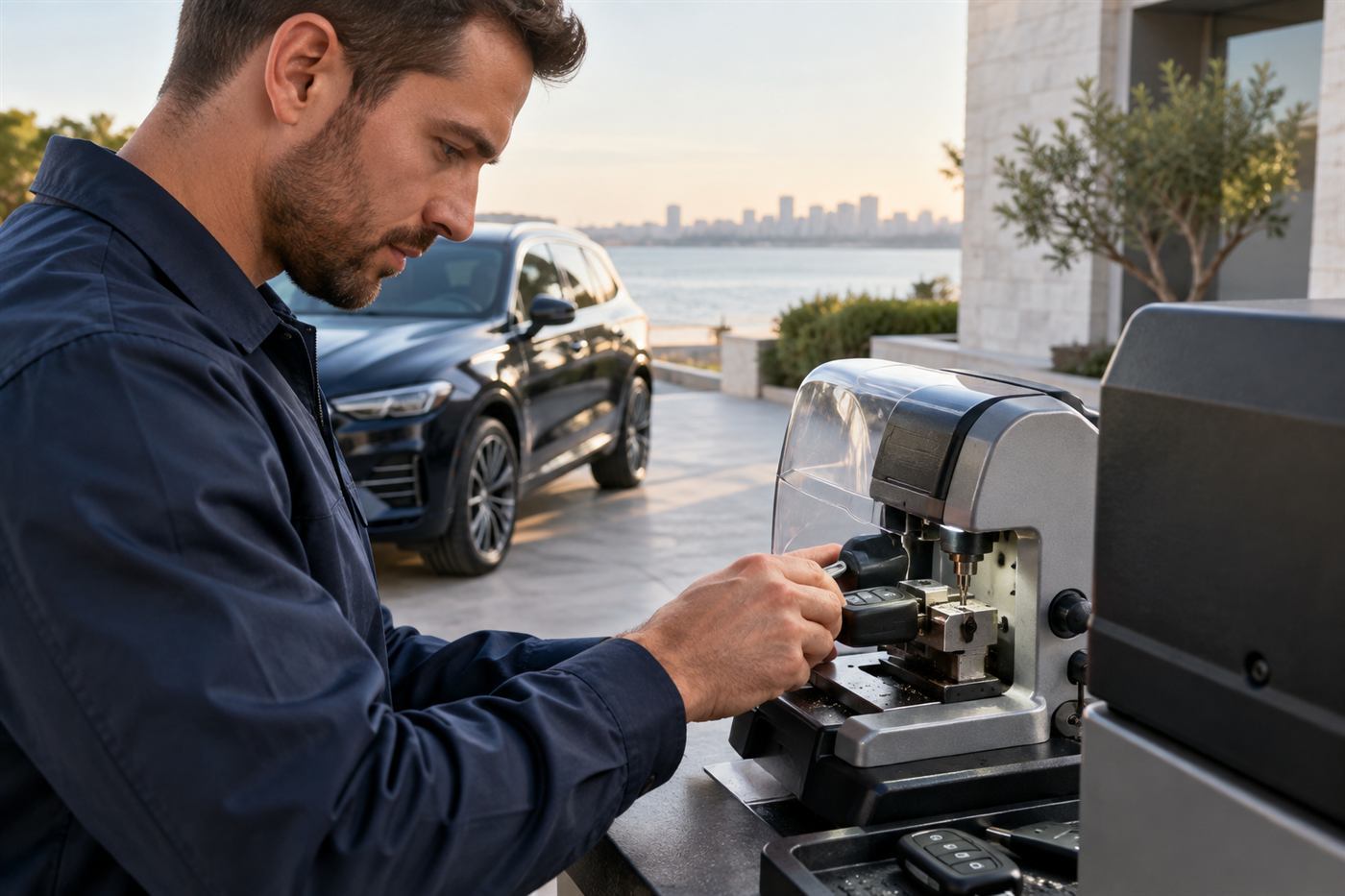
What a cloned key actually is
A cloned key is a copy that tries to imitate your original key as closely as possible. For a basic metal key with no chip, a clone is simply a cut copy, and it behaves exactly like the original because the lock only cares about the shape of the blade. For a modern transponder key, the word clone means something more complicated. The copy has to carry the same electronic identity as the original, so that the car's immobilizer believes it is talking to the key it already knows.
That is where things go wrong. A transponder clone is made by reading the data stored in the chip of your working key and writing a matching copy into a blank chip. Some chip families can be copied this way. Others use protection that is designed to resist copying, and a clone of those may start the car once, behave strangely, or never start it at all. The blade can be cut perfectly and still be useless if the chip does not satisfy the car.
It also helps to separate two different things that people call a clone. One is a true electronic copy of the original chip data. The other is a new key that has been added to the car's memory through programming. The second approach gives the car a fresh key identity that it accepts directly. When a clone fails, a programmed key is often the cleaner repair, and that difference is the heart of this page.
Common reasons a clone fails
Clones fail for a handful of repeat reasons. Knowing them helps you describe the problem accurately when you call, and helps you avoid paying for the same mistake twice.
The most common cause is a chip type that cannot be reliably copied. Many vehicles from the last two decades use rolling or encrypted chip protocols. A cloning machine may produce a copy that responds in a bench test but does not match what the immobilizer expects when it challenges the key. The result is a key that opens the door and turns in the ignition, yet the engine will not fire or cuts out after a second or two.
- The chip family is protected against copying, so the clone only partly matches.
- The clone was written onto the wrong blank chip, one that looks similar but uses a different protocol.
- The original key was already worn or damaged, and the copy inherited bad data.
- The car was reprogrammed or had its immobilizer module replaced after the clone was made.
- The blade was cut from a worn original and no longer lines up with the lock wafers.
- The battery in a remote head or the remote circuit failed, so only part of the key works.
Signs that point to a chip problem rather than a blade problem
You can learn a lot from how the key behaves. If the key goes into the ignition, turns smoothly, and the dashboard lights up as usual, the blade is doing its job. If the engine then refuses to start, or starts and dies right away, the immobilizer is the likely reason. Many cars show a security light, a key symbol, or a padlock icon during these attempts, and that light is a useful clue to mention on the phone.
If the key will not turn at all, or feels rough and catches, the blade is more likely at fault. A copy cut from a worn key can carry the wear forward, so a clone that feels tight on the first day may get worse quickly. Cutting a fresh blade from the vehicle's original key data, rather than copying a tired key, usually fixes this.
A third pattern is a key that works some days and not others. Intermittent failure often points to a chip that is only marginally compatible, or to a worn contact inside a remote head. The car might accept the key when everything is cool and dry and reject it when the key is warm or the battery in the car is a little low. Intermittent faults are worth taking seriously because a key that works most of the time tends to fail at the worst possible moment.
Clone versus programmed key
A programmed key is added to the vehicle's memory using diagnostic equipment, so the car learns the new key as one of its own. The key carries its own identity rather than trying to repeat the identity of another key. For most cars this is the more dependable path, because the car and the key agree by design instead of by imitation.
The practical differences are worth laying out side by side.
| Point | Cloned key | Programmed key |
|---|---|---|
| How it works | Copies the chip data of an existing key | Car learns a new key through diagnostics |
| Needs the original key | Yes, a working one | No, it can be done when all keys are lost |
| Reliability on protected chips | Can be poor | Generally the intended method |
| Effect on car memory | None, the car sees two identical keys | Key is added as a separate entry |
| Good use | Simple chip types that copy cleanly | Most modern vehicles |
Why a duplicate identity can cause trouble
When a clone carries the exact same identity as the original, the car sees two keys that are indistinguishable. On some systems this is acceptable. On others, it can confuse the immobilizer, particularly when both keys are used on the same day. A few vehicles even react to the double identity by refusing both keys until the system is reset.
There is also a practical downside: if you ever lose one of the two, you cannot tell the car to forget it without also affecting the copy. A programmed key avoids this because each key is its own entry, and a lost key can be removed from memory on many vehicles while the others keep working. That is a real security benefit if a key has gone missing in a public place.
What you can safely check before calling
There are a few harmless checks that can narrow the problem down. None of them require tools or taking anything apart, and none of them risk damaging the key or the car. They simply give the technician better information so the call is shorter and the visit is better prepared.
Resist the urge to keep cranking again and again. Repeated attempts with a bad key can lock the immobilizer out for a period on some vehicles, and they will drain a weak battery. If the clone does not work after two or three clean tries, stop and make the call.
- Try your original key, if you still have it. If the original starts the car normally, the problem is with the clone and not the car.
- Notice what the dashboard does with the clone. Does a key or lock light stay on, flash, or appear only after you turn the key?
- Check whether the doors lock and unlock with the clone's buttons, if it has them. Working buttons with a non-starting engine point to a chip issue.
- Look at the clone beside the original. Compare the shape of the blade and the plastic head. Mismatched head styles hint at a wrong chip type.
- Try the key in a dry condition and wait a minute before trying again. A car that has just been refused a bad key may need a short rest before it accepts a good one.
- Make a note of the make, model, and year, and where to find the vehicle identification number on the dash or door jamb.
What a technician will check on arrival
A good technician starts by confirming what the car expects, not by assuming the clone is at fault. That means identifying the exact vehicle, reading the immobilizer system, and learning which chip protocol the car uses. This takes a few minutes with the right equipment and prevents guesswork.
Next comes a look at the clone itself. The technician may test whether the chip responds, whether the blade fits, and whether any remote functions work. Sometimes the blade can be recut and the chip is fine. Sometimes the chip is the wrong type and cannot be rescued. In that case the honest advice is to stop spending effort on the clone and program a proper replacement.
If a new key is needed, the technician will usually need proof that you own the vehicle before cutting and programming it. That is normal and protects you, because it is exactly the check that prevents a stranger from getting a key to your car. You can read more about that process in our guide on proof of ownership for a car key.
When the real fix is a new key
There are situations where trying to repair a clone wastes time. If the chip type is protected, if the original data was already damaged, or if the clone has failed more than once, the sensible step is a new key programmed to the car. This gives you a key the car recognizes by design and a clean starting point for any future copies.
Depending on the car, a replacement can be a simple transponder key, a laser cut key, a remote head key, or a smart key with push button start. Our pages on transponder key programming, spare car key programming, and car key replacement explain how each type works.
If the clone was your only spare and the original is gone too, you are in an all keys lost situation, and the job is a little different because there is no working key to learn from. The page on all keys lost covers what that involves. The key point is that a locksmith can still produce a working key without any original in hand.
How to avoid the same problem again
Most clone failures come from choosing the quickest route to a copy without checking whether the chip can be copied. A short conversation up front can save a repeat visit. Ask whether the chip in your key can be cloned reliably, or whether the vehicle is better served by programming a new key to the car.
Keep your best working key as the master and avoid using it for everyday duty if you can. A spare that is programmed properly can be the daily key, which also spares the original from wear and keeps it safe as a backup. Store the spare somewhere separate from the original so a single loss cannot take out both.
Finally, treat any key that behaves oddly as a warning. A clone that sometimes fails will eventually fail for good. Replacing it while you still have a working original is much easier, and usually less stressful, than replacing it after the car has stopped in a parking lot.
What to have ready when you call
The call goes faster when you have a few details on hand. The technician will ask about the vehicle and about the key, so a little preparation pays off.
Have the make, model, and year ready, along with the vehicle identification number from the dashboard or door jamb. Describe what the key does and what the dashboard shows. Mention whether you still have the original key. Mention where the car is parked, because that affects how the visit is planned.
Be ready to show identification and proof that the vehicle is yours, such as a registration or title. Quotes are given by phone, and a more involved job may need an on-site visit. There is a service call charge, and it is explained on the phone before anyone is dispatched, so there are no surprises when someone arrives. If your clone has stopped working and you are not sure why, call and talk it through with a person who can ask the right questions.
Questions people ask
Why does my cloned key open the door but not start the car?
The door lock only reads the blade, while starting the engine also requires the car to accept the chip. A clone can carry a perfect blade and an imperfect chip. If the immobilizer does not recognize the chip data, the engine stays disabled. A newly programmed key is the usual remedy because the car learns it directly.
Can a failed clone be fixed or reprogrammed?
Sometimes. If the chip is the correct type and only the data is off, a technician may be able to rewrite or reprogram it. If the chip is the wrong type or is protected against copying, it cannot be rescued. A technician can test it on arrival and tell you honestly which situation you are in.
Is a programmed key better than a clone?
For most modern vehicles, yes. A programmed key is added to the car's memory as its own entry, so the car recognizes it by design. A clone depends on imitating another key. Simple chips can clone well, but protected chips often cannot, and a programmed key avoids that uncertainty.
Do I need my original key to get a new one?
No. A locksmith can program a new key even when no working key exists, though the job is different from copying. You will need to show proof that you own the vehicle and a valid identification. Having the original simply makes some steps simpler and sometimes shorter.
Will using a clone and the original together cause problems?
On some vehicles, two keys with the same identity can confuse the immobilizer, especially if both are used close together. Other cars tolerate it. If the car behaves unpredictably when you switch between keys, that is a sign to replace the clone with a properly programmed key.
How do I get a price for a replacement key?
Prices are given only by phone, after the technician knows the vehicle and the key type. Simple jobs can be quoted right away. More involved ones may need an on-site visit. A service call charge applies and is explained before dispatch. Call, describe the problem, and ask any questions you have.
Describe the situation by phone and we will tell you what the job involves. Quotes are given by phone. Jobs that cannot be quoted without seeing them need a technician on site, and the service call charge is explained on the phone before anyone is dispatched.
(844) 715-0800Related pages
Written by Claude (AI) (AI) for 24/7 Locksmith USA.